
Key Takeaways
- Picasso produced more than 2,400 prints across seven decades, working directly with a succession of master printers rather than delegating the process — a level of personal involvement rare among artists of his stature.
- The Vollard Suite illustrates just how differently a single plate and a complete set can be valued: individual etchings typically trade for $1,700 to $35,000, while a rare, still-complete 100-print set reached roughly $4.76 million at Christie's in 2019.
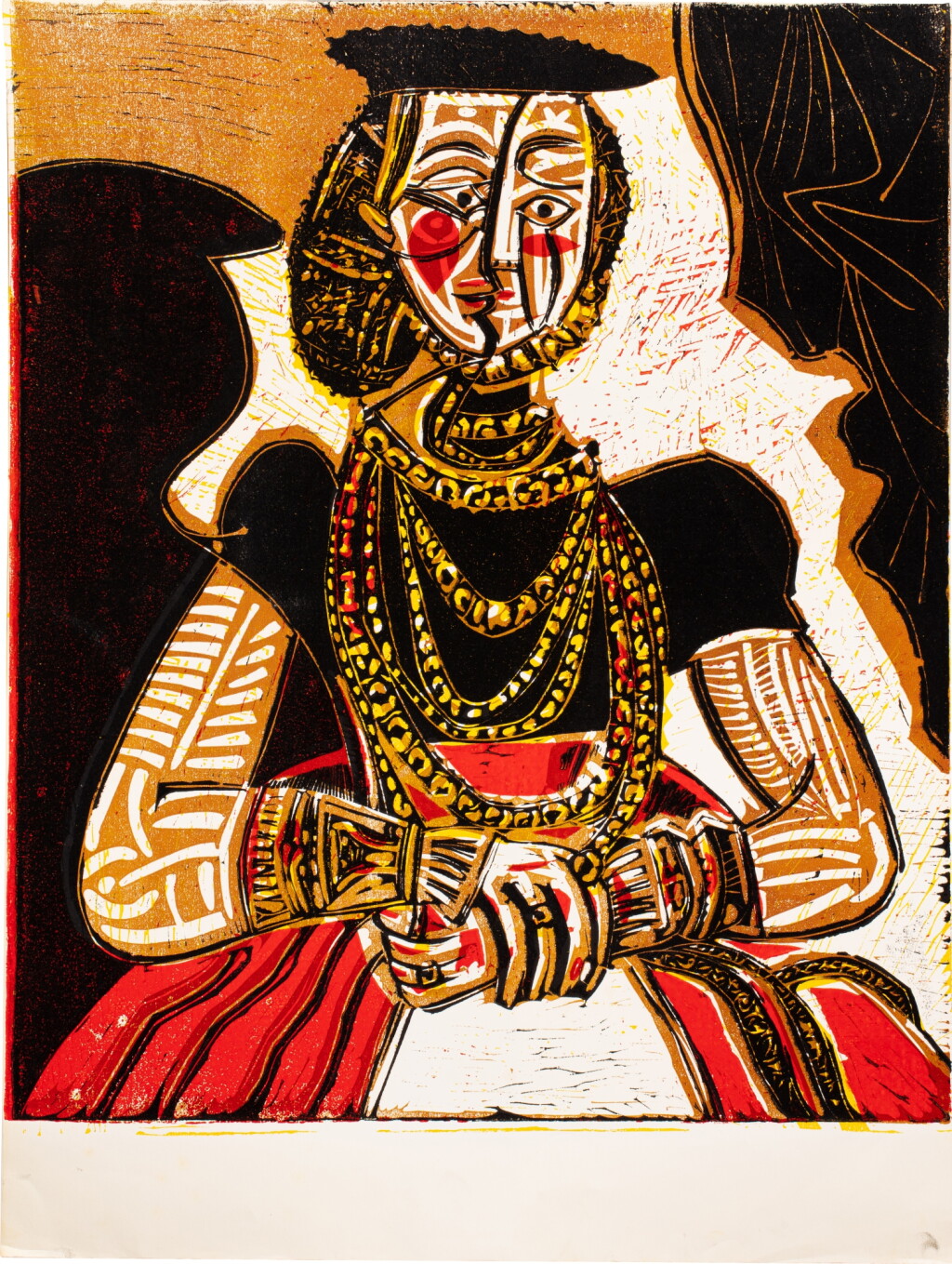
- His most valuable linocut, Buste de femme d'après Cranach le Jeune (1958), sold for $882,000 at Christie's in October 2024, 26% above its $700,000 estimate — evidence that rarity of format can matter as much as rarity of set.
- Portraits of Jacqueline Roque, his final muse and wife, anchor his late printmaking and remain among the most sought-after subjects in his graphic work.
- Authentication rests on signature type, publisher and printer records, and cross-referencing against the Bloch, Baer, and Mourlot catalogues — though a catalogue listing confirms a work's documented details rather than serving as proof of authenticity on its own.
Pablo Picasso didn't just paint differently — he changed what painting was allowed to do, more than once, and then did it again. He co-invented Cubism, fractured the picture plane, moved through Neoclassicism and Surrealism, and kept reinventing his own style into his nineties, all while producing an output almost no other artist has matched: over 20,000 works across painting, sculpture, ceramics, and print. Printmaking wasn't a footnote to that career — it was where he tested some of his most experimental ideas, working the plate and the block with the same restless invention he brought to canvas, right up until his final years.
This guide to collecting Picasso prints covers his life, the techniques and printers behind his graphic work, his major print series by period, the muses and subjects that recur throughout, current market performance, authentication, and how to think about acquisition across three collector levels.
Who Was Pablo Picasso
Pablo Picasso was born in Málaga, Spain, in 1881, the son of a drawing teacher who recognised his talent early and enrolled him in formal art training as a child. By his teens he was producing academically accomplished work, and by 1900 he had made his first trip to Paris, the city that would anchor most of his career.
His Blue Period (1901–04) and Rose Period (1904–06) established him within the Parisian avant-garde, but it was his development of Cubism alongside Georges Braque, beginning around 1907, that made him one of the most influential artists of the century. He continued to evolve stylistically for the rest of his life — through Neoclassicism in the 1920s, an engagement with Surrealism in the 1930s, and the loose, urgent late style of his final decades — while remaining, throughout, one of the most prolific printmakers of his generation.
Picasso's personal life shaped his art directly and repeatedly: his relationships with Marie-Thérèse Walter, Dora Maar, Françoise Gilot, and finally Jacqueline Roque each mark a distinct period in his output, on paper as much as on canvas. He married Roque in 1961 and remained with her until his death in Mougins, France, in 1973, at the age of 91.

His Printmaking Techniques
Picasso worked across nearly every printmaking technique available to him, often combining several on a single plate, and each left a distinct mark on his output. Etching — drawing directly onto a wax-coated metal plate with a needle, then exposing it to acid that bites into the exposed lines — was his primary tool for the Vollard Suite. Aquatint, which uses a resin-coated plate to produce tonal gradations rather than lines, reached its most dramatic expression in La Minotauromachie (1935), a single large plate combining etching and aquatint that remains one of his most sought-after individual prints — made using his own variant, sugar-lift aquatint, developed with printer Roger Lacourière in 1934, which let him paint directly onto the plate with a sugar solution for an unusually atmospheric effect. Drypoint, made by scratching directly into a metal plate and leaving a soft, velvety burr around each line, appears as early as Salomé (1905), from his Rose Period. Lithography, which relies on the natural repulsion between oil and water and involves drawing onto a stone or metal plate with an oily crayon, produced Dove of Peace (1949), one of his most widely reproduced images. And linocut, which he took up in the 1950s by cutting into sheets of linoleum so the raised surface holds the ink, gave him Buste de femme d'après Cranach le Jeune (1958), his most valuable print in that medium.
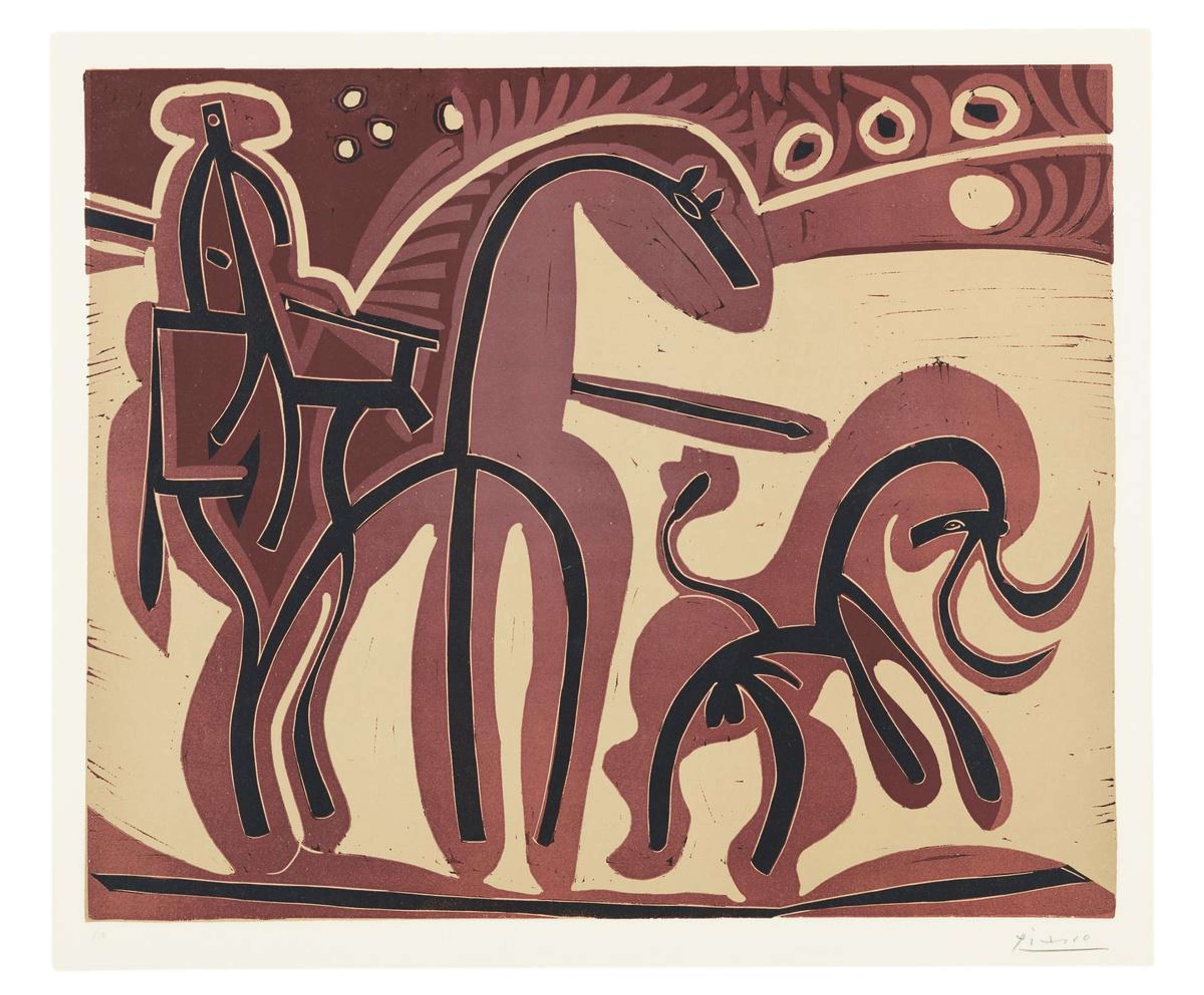
Picasso's most significant technical innovation came from his own impatience with the linocut process. Rather than cutting a separate block for each colour, he developed what's now called the reduction method: carving away more of a single block between each successive colour pass, so the same block progressively destroyed itself over the course of an edition. It made reprinting the same image impossible once the run was complete — an inherent, built-in scarcity that still shapes how his linocuts are valued today.
.jpg)
His Major Print Series by Period
The Vollard Suite (1930–1937) is the foundation of Picasso's reputation as a printmaker: 100 etchings and aquatints made for the dealer Ambroise Vollard, produced with Roger Lacourière and centred on mythological themes — the Minotaur above all, often read as a stand-in for Picasso himself — alongside scenes inspired by his relationship with Marie-Thérèse Walter. Most of the original sets were broken up decades ago, which is precisely why individual plates now trade at accessible prices — typically $1,700 to $35,000, averaging around $13,000 over the past year — while a complete, still-intact set is a genuine rarity: one sold for roughly $4.76 million at Christie's in 2019, described at the time as a record for Picasso's print market.
The Mourlot lithographs (from 1945) mark Picasso's postwar return to Paris, where he began working with master printer Fernand Mourlot. This period produced some of his most experimental print sequences, including a series built around a single bull image, reworked across successive states from a recognisable animal down to just a few essential lines — a rare, extended look at Picasso's process of reduction and simplification in real time.
The Vallauris linocuts (1950s), made after Picasso relocated to the Côte d'Azur and began working with local printer Hidalgo Arnéra, are where the reduction method emerged and where his most celebrated linocuts were produced. Buste de femme d'après Cranach le Jeune (1958), his most valuable linocut, sold for $882,000 at Christie's in October 2024 — a reminder that a single, exceptional plate can command prices that rival far larger bodies of work.
Suite 347 and Suite 156 (1968–1972) were made in the final years of Picasso's life with Aldo and Piero Crommelynck, brothers who relocated their etching studio to Mougins specifically to work with him. Wide-ranging in subject and produced at extraordinary speed — Suite 347 alone comprises 347 etchings completed in under seven months — both series give collectors genuine, wide-ranging access to Picasso's etching career at its most prolific and experimental.
Muses and Recurring Subjects
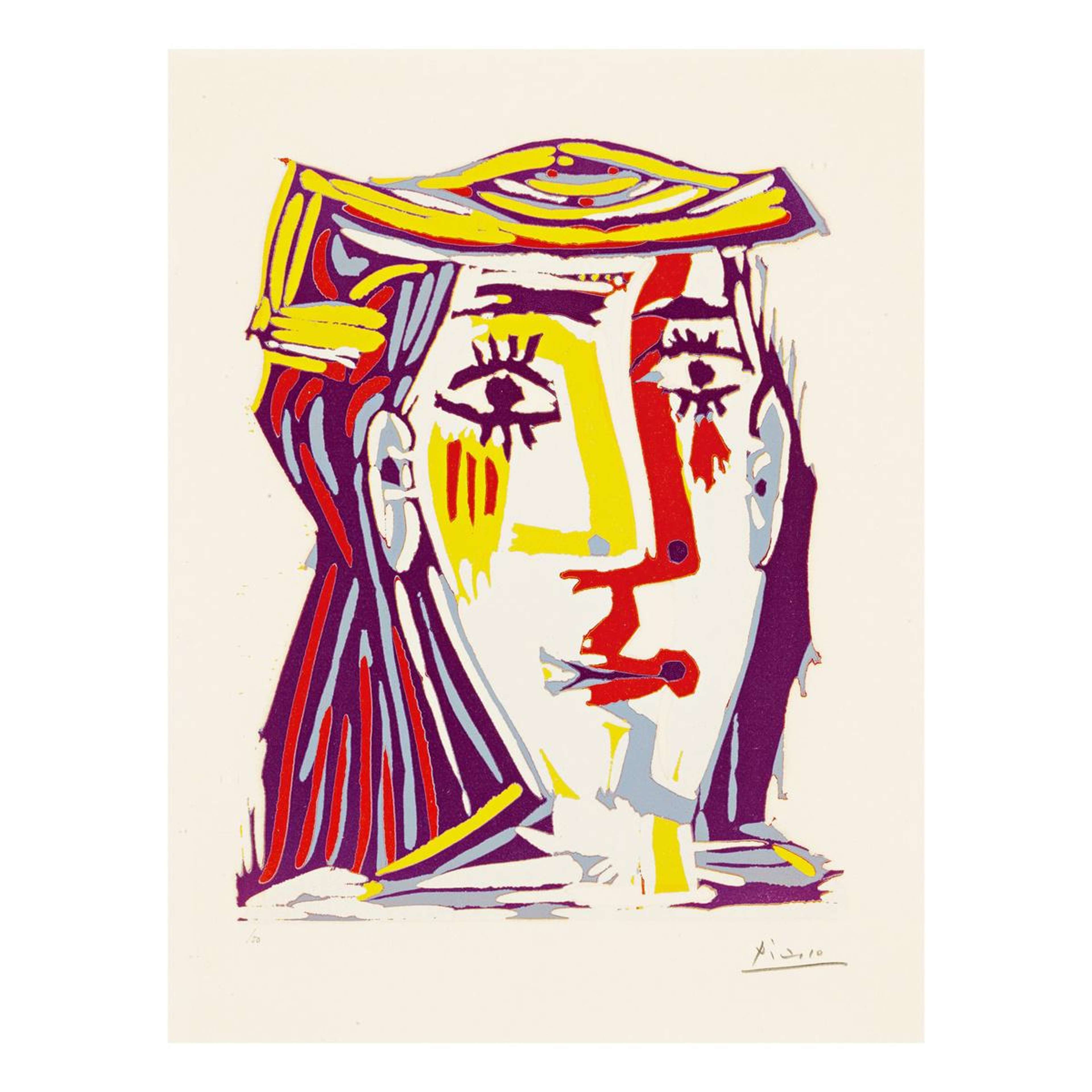
Picasso's prints are as organised by subject as by period, and his successive muses each dominate a distinct stretch of his graphic output. Marie-Thérèse Walter appears throughout the Vollard Suite, her likeness folded into the mythological imagery of the 1930s. Dora Maar, his partner through the late 1930s, is closely associated with his Weeping Woman imagery — prints derived from that painting carry a premium, in keeping with the broader pattern of blue-chip artists' prints tied to a famous canvas. Françoise Gilot, his partner through much of the 1940s and early 1950s, appears across the Mourlot lithograph period. And Jacqueline Roque, his final wife and muse from 1954 until his death, dominates his late output almost entirely — her face recurs across his final etchings, lithographs, and linocuts, rendered with an increasingly loose, urgent hand; a 1962 linocut portrait of her in a straw hat sold for over $100,000 at Christie's in 2024.
What makes these portraits collectable as a group is how radically Picasso's style shifted from one muse to the next. Marie-Thérèse is rendered through the fractured, mythologised language of the Vollard Suite; Dora Maar through the anguish and formal distortion that runs through his late-1930s Surrealist engagement; Jacqueline through a looser, more economical line that grew more experimental as he aged rather than less — proof that his appetite for reinvention never slowed, even in his final years working alongside the Crommelyncks.
Beyond his muses, two subjects recur across every period: the Minotaur, his recurring mythological alter-ego, and bullfighting, drawn from his Spanish upbringing and returned to throughout his career as a subject for both etching and lithography.
The Market in 2026: Current Demand
Demand for Picasso's prints remains broad, spanning collectors drawn to a specific technique, period, or muse rather than concentrating on a single headline series. Rare linocuts and intact complete sets continue to anchor the top of the market, but individual plates from even his most significant series, along with Suite 347 and Suite 156, have sustained real, active trading as accessible entry points, and prints tied to his most photographed relationships — Jacqueline in particular — continue to draw strong, consistent interest.
His painting market, which regularly produces nine-figure results, keeps his overall name recognition at a level few other artists of any era can match, and that visibility carries directly through to demand for his prints.
Authentication and Provenance
How can I tell if my Picasso print is authentic? Confidence comes from checking several things together. Signature matters most: prints hand-signed in pencil and numbered (for example, 17/50) command the strongest prices, while prints signed only in the plate — meaning the signature is part of the printed image itself, not added afterward by hand — are still authentic and collectable, but trade at a different level. The publisher and printer are the second check: Picasso worked with a specific, well-documented printer for each period of his career — Lacourière for the Vollard Suite, Mourlot for his postwar lithographs, Arnéra for his linocuts, and the Crommelyncks for his final etchings — and a publisher's or printer's blindstamp consistent with the correct period supports a work's history.
The third reference point is the catalogue raisonné. Picasso's print catalogues — chiefly Georges Bloch's volumes covering his printed graphic work overall, Brigitte Baer's catalogue of his engraved and intaglio work specifically, and Fernand Mourlot's catalogue of his lithographs — are the definitive technical record of his output, documenting dimensions, edition size, date, medium, and signature status for every catalogued print. A Bloch or Baer number is the strongest single reference point available for confirming exactly what a print is meant to be. Signature, provenance, and physical examination then confirm that the specific impression in hand is that print.
Collecting by Tier
How much does a Picasso print cost? His market spans an unusually wide range across different series and techniques — a single linocut or lithograph can be acquired for a few thousand dollars, while his rarest individual plates and complete sets reach seven figures.
Starting a Collection (Sub-$40,000) is where individual Vollard Suite etchings sit alongside Suite 347 and Suite 156 prints, smaller-format Mourlot-period lithographs, and minor linocut compositions. These represent genuine, documented entry points into Picasso's printmaking, spanning several decades and techniques — including plates from his most historically significant suite — rather than a single narrow slice of his career.
Core Collector ($40,000–$200,000) is where strong signed linocuts and stronger examples from the Mourlot lithograph period trade, including prints tied to Marie-Thérèse, Dora Maar, or Jacqueline.
Established Collector ($200,000 and above) is where the rarest material lives: the most celebrated individual linocuts, such as Buste de femme d'après Cranach le Jeune, and complete series wherever they still surface intact — including, at the very top, a complete Vollard Suite.
Acquisition Strategies
Technique Focus builds a collection around a single printmaking method — etchings, linocuts, or lithographs specifically — to trace how Picasso pushed one medium across his career.
Period Focus concentrates on a specific decade, such as the Vollard Suite years or the late Crommelynck period, telling a coherent story about one stretch of his working life.
Muse Focus collects around a specific relationship — Marie-Thérèse, Dora Maar, Françoise, or Jacqueline — following how Picasso rendered the same person across different techniques and years.
Subject Focus follows a recurring theme, such as the Minotaur or bullfighting, across whichever period or medium it appears in.
Quality-First sidesteps all of the above: acquiring the strongest available impression that clears authentication and provenance checks, regardless of technique or period, and letting condition and rarity guide the decision.
Picasso's Highest Auction Results
These are unique paintings, not editioned prints, but their prices are the reason his name carries the authority it does across every part of his market.
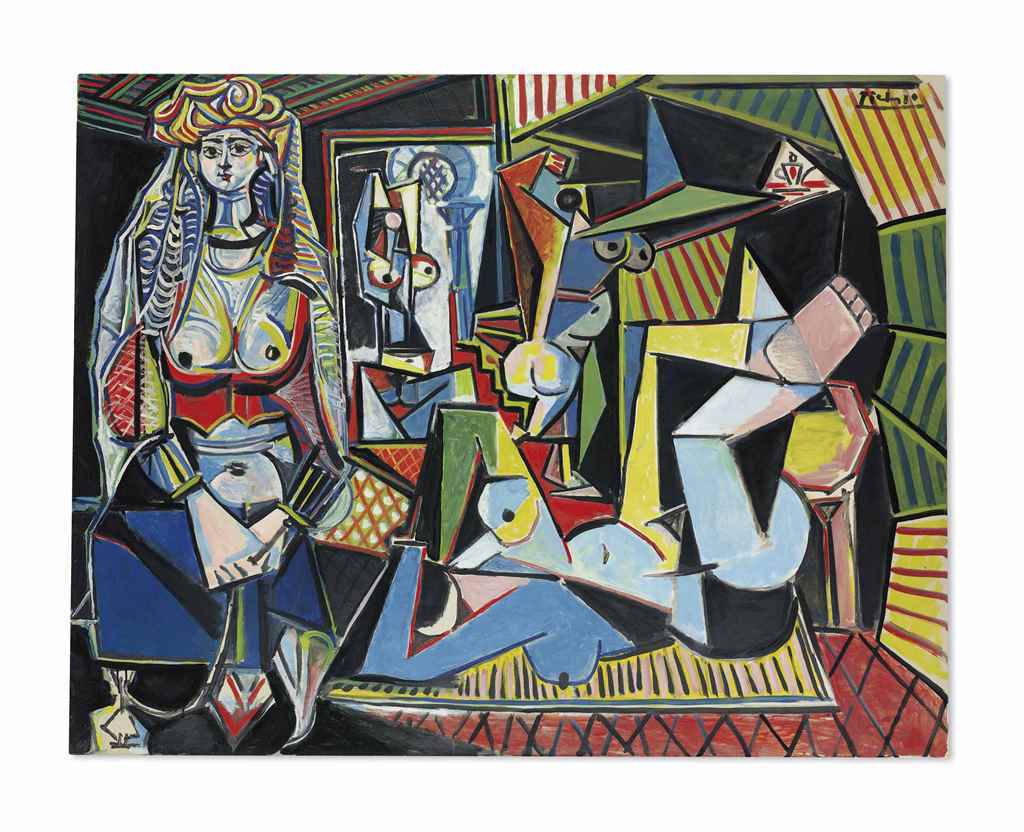
Les Femmes d'Alger (Version O) (1955) — $179.4 million, Christie's, May 2015. The final work in a fifteen-painting series based on Delacroix's Women of Algiers, and the current auction record for the artist.
Nude, Green Leaves and Bust (1932) — $106.5 million, Christie's, 2010. A portrait of Marie-Thérèse Walter, painted during the period that also produced much of the Vollard Suite's imagery.
Garçon à la Pipe (1905) — $104.2 million, Sotheby's, 2004. A Rose Period work depicting a Parisian boy, and Picasso's auction record until it was surpassed in 2010.
Is Pablo Picasso Still a Good Investment in 2026?
Picasso's print market offers a rare breadth: seven decades, half a dozen distinct techniques, and a roster of subjects and muses few artists can match, all within a single, consistently in-demand name. Whatever level a collection is being built at, the strongest move is to understand exactly what's being bought — the series, the period, and the documentation behind it — since it's precisely that clarity, combined with a painting market that keeps setting records and hands-on printmaking rare among artists of his stature, that has kept his prints among the most resilient in the entire market.
For more information on our original Picasso prints for sale or to sell your Picasso prints contact our team via info@alexyellop.com