
Key Takeaways
- Ruscha continues to work today, extending a printmaking career that already spans six decades across screenprint, lithograph, etching, and aquatint.
- His prints move between bold, text-based typographic works and sweeping landscape imagery, spanning six decades of stylistic reinvention across nearly every printmaking technique.
- Ruscha ranks 11th globally among artists by auction turnover, and in the first half of 2025, 43% of his prints sold above high estimate with an 83% sell-through rate — real strength across a broad market, not just at the top.
- Demand concentrates around his most recognisable American imagery — gas stations, Hollywood, and his text-based Word Prints — but real collector interest runs across his full range of series and techniques.
- Three practical collector levels apply, from accessible entry material to his rarest individual prints and complete sets.
Ed Ruscha took the most ordinary fragments of American life — a gas station, a movie studio sign, a single word lifted from a bar's neon — and gave them the same permanence usually reserved for landscape or portraiture. He's carried that sensibility across six decades and nearly every printmaking technique available to him, and continues to today. Few living artists have shaped how an entire country reads its own visual culture as thoroughly as Ruscha has, and his print market reflects that range — moving fluidly between stark typographic works and sweeping landscape imagery, technique to technique, decade to decade.
This guide covers his life and printmaking practice, the recurring American themes that run through his work, the major series worth knowing by name, current market performance, authentication, and how to think about acquisition across three collector levels.
Who Is Ed Ruscha
Ed Ruscha was born in Omaha, Nebraska, in 1937, and moved to Los Angeles in 1956 to study at the Chouinard Art Institute, arriving with a background in commercial art and design that would shape his entire visual vocabulary. The drive between Oklahoma, where his family had relocated during his childhood, and Los Angeles gave him a firsthand education in the American roadside landscape — gas stations, motels, drive-ins — that became his defining subject matter.
His painting career and his print career developed side by side from the start, most famously in Standard Station (1966), which turned a Standard Oil gas station into a study in geometric confidence, the same clarity he brought to his text-based prints. What set Ruscha apart from his contemporaries was his insistence that commercial visual language — signage, typography, advertising — belonged in fine art on equal footing with any traditional subject, an idea that now runs through decades of artists working with text and image. That influence, sustained across six decades of continuous output, is a large part of why he's regarded as one of the defining American artists of the postwar period. Ruscha continues to produce new work today, across painting, drawing, and print, extending a practice now in its seventh decade.
His Printmaking Practice
Ruscha continues to work across screenprint, lithograph, etching, and aquatint, often choosing a technique for what it could do to a single word or image rather than out of habit. Screenprint gave him the flat, poster-like precision his text-based work depended on — bold, evenly saturated colour with hard edges, well suited to reproducing a word exactly as it might appear on a sign or a package. Lithography, worked at print studios including Tamarind Lithography Workshop and Cirrus Editions, let him introduce a softer, more painterly touch, particularly in later series like Mountain Series, where gradients and atmospheric effects mattered more than crisp typography. Etching and aquatint appear less frequently across his output but let him bring a more textured, hand-worked quality to select projects.

Recurring American Themes
Ruscha's work returns constantly to a small set of American subjects, treated with a commercial artist's precision and a conceptual artist's detachment. Gas stations and the American road — most famously in Standard Station — draw on his own drives across the Southwest and remain his most valuable and recognisable imagery. Hollywood and the mythology of Los Angeles appear throughout his career, treating the film industry's iconography with the same flat, sign-like clarity as his roadside subjects. Text as image runs through everything from single words built as monumental objects to full phrases pulled from overheard speech or roadside signage — his Word Prints series is the clearest expression of this, isolating a single word like "Sin" or "News" until its shape and sound become the entire subject. And mountains, taken up in paint in the 1990s and moved into print from 2010, pair sweeping, almost sentimental landscape imagery with the same cryptic, ironic phrases that anchor his text work.
Major Series and Prints Every Collector Should Know
Standard Station (1966) is Ruscha's most valuable and widely recognised print subject, based on the gas-station imagery that also produced his record-breaking paintings. Individual prints from this imagery anchor the top of his print market.
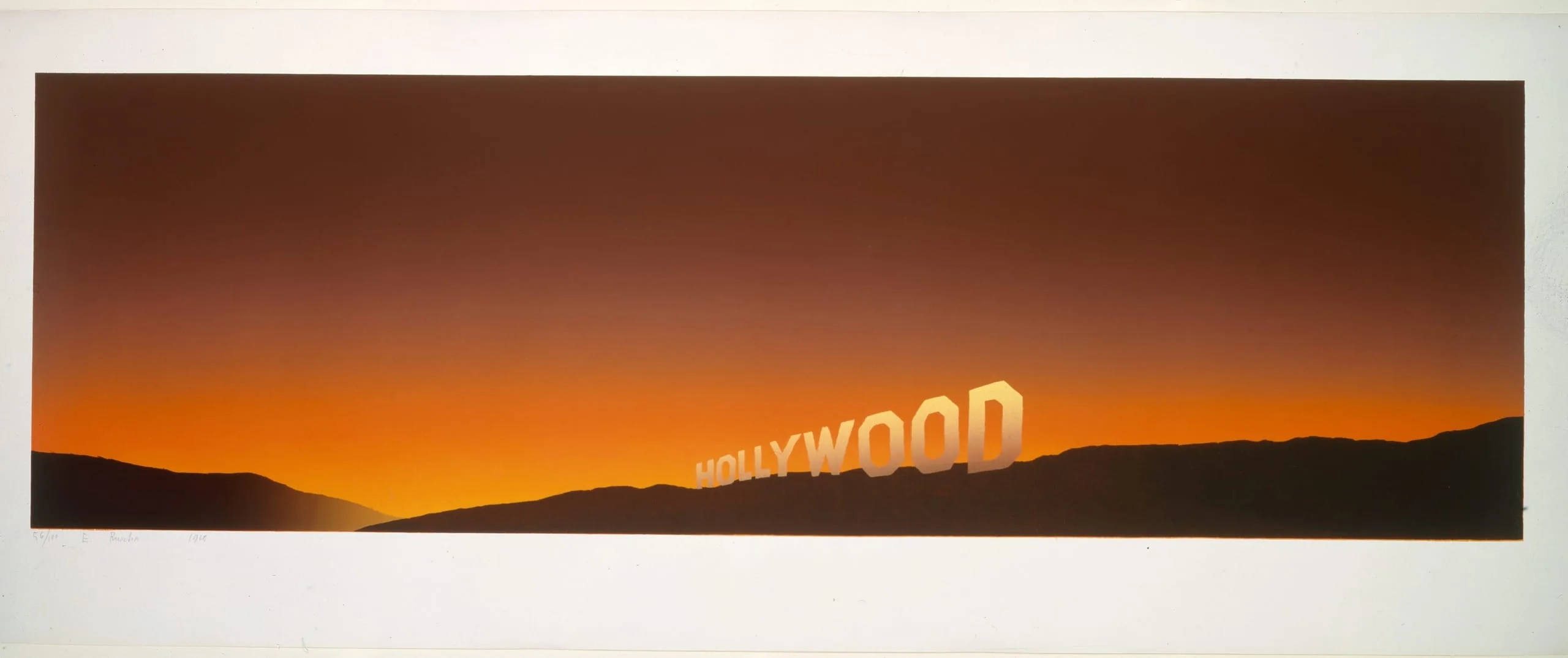
Hollywood (1968) moved through photograph, canvas, and print in succession before arriving at its final editioned form. A strong example reached $150,000 at Bonhams in September 2021, one of the standout results in his entire print market.
The Word Prints (1970s–80s) isolate single words or short phrases — Sin, News, Mews, Pews — reducing language to pure typographic object. They're available both as individual prints and as complete sets.
That Is Right (1989) is a lithographic portfolio issued in an edition of just 30, making complete sets truly scarce; one reached $96,000 at Christie's in November 2024.
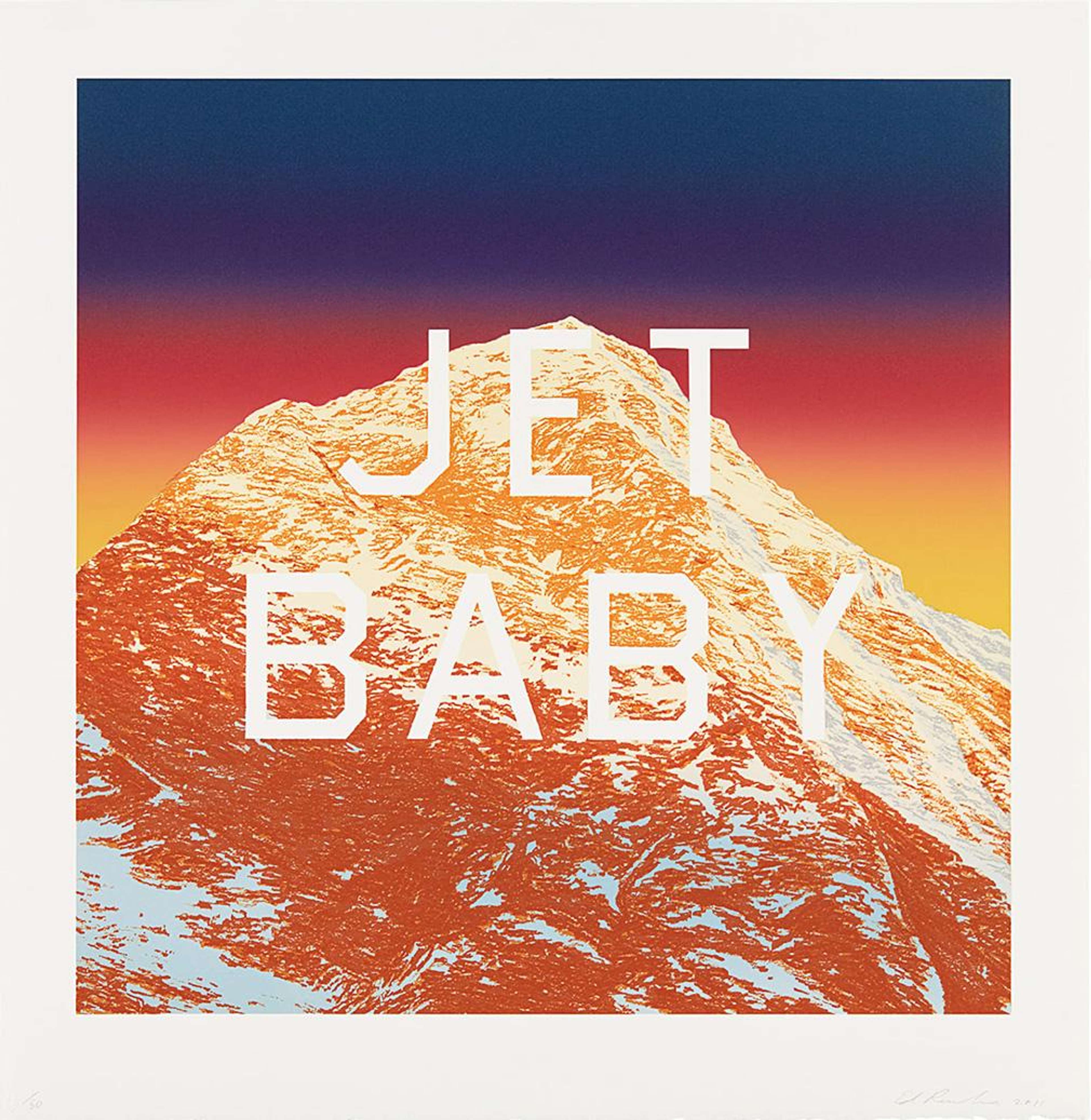
Mountain Series prints (2010–2015) pair landscape imagery with cryptic text, based on paintings Ruscha began in 1996. Gagosian Geneva dedicated the first exhibition devoted exclusively to these prints in 2016.
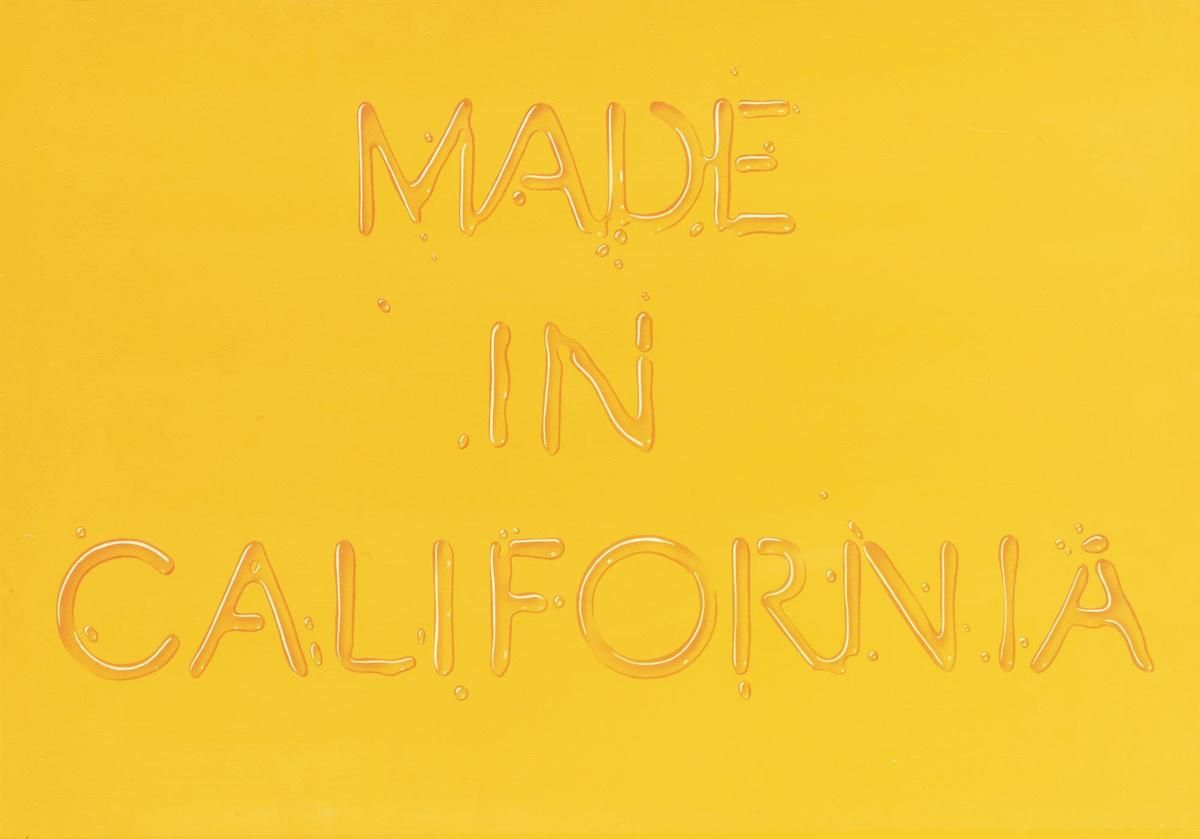
Made In California (1971) is a standalone screenprint not derived from any painting — a rarity in Ruscha's practice. It continues to perform strongly whenever an example surfaces, reaching $86,000 at Abell Auction Co. in March 2024.
Course of Empire (2005) reflects on American industrial expansion and decline, extending his roadside and commercial imagery into explicitly historical territory.
The Market in 2026: Current Demand
Ruscha's print market has shown real resilience through 2025: 43% of his prints sold above high estimate in the first half of the year, up sharply year-on-year, with sell-through holding at 83% and average sale prices staying steady even as fewer works have come to market — a pattern that points to selective, quality-focused demand.
Demand for his prints spans distinctly different collector motivations — some drawn purely to the Americana and roadside imagery, others to his conceptual treatment of text and language, and others still to the sheer rarity of certain editions, such as Made In California, that surface only occasionally. That range keeps his market broad rather than concentrated on a single series, even as his most iconic imagery continues to command the strongest results.
Authentication and Provenance
How can I tell if my Ed Ruscha print is authentic? Because Ruscha continues to work, verification rests on documentation rather than a posthumous estate board. Confirm the publisher first — Ruscha has worked consistently with a small number of studios, including Tamarind Lithography Workshop, Cirrus Editions, and Brooke Alexander Editions — since publisher records for his prints are well maintained and specific to each edition. Verify the signature and edition number next, and cross-reference the print's details against his catalogue raisonné. A track record of prior sales and exhibition appearances rounds out the picture.
Collecting by Tier
Starting a Collection (Sub-$25,000) is where a first Ruscha becomes truly achievable — real, hand-signed, well-documented editions from a living master, not a compromise on quality. The vast majority of his print market sits at this level: roughly 84% of all Ruscha prints sold at auction trade under $19,000, the same rigour and eye for language and image that define his six-figure work, available at a genuine entry point rather than as a rare exception.
Core Collector ($25,000–$100,000) is where signed screenprints and lithographs from his major series generally trade — individual Word Prints such as Sin or News, Mountain Series prints like Jet Baby or Wall Rocket, and standard Hollywood impressions.
Established Collector ($100,000 and above) is where his rarest prints and complete sets live: the strongest Hollywood impressions, a complete That Is Right portfolio, and Made In California.
Acquisition Strategies
Theme Focus collects around one recurring subject — gas stations, Hollywood, or his Word Prints specifically — tracing how Ruscha treated a single idea across different techniques and decades.
Technique Focus builds around a single printmaking method, following how his screenprints or lithographs evolved across his career.
Rarity Focus pursues his least frequently traded prints, such as Made In California or a complete That Is Right portfolio, prioritising scarcity over breadth.
Era Focus concentrates on a specific decade — his 1960s breakthrough, or his more conceptual 1970s and 80s text work — rather than his full career.
Quality-First sidesteps all of the above: acquiring the strongest available example that clears authentication and condition checks, regardless of series or period, and letting condition and rarity guide the decision.
Ruscha's Highest Auction Results
These are unique paintings, not editioned prints, but their prices are the reason his name carries the authority it does across every part of his market.
Standard Station, Ten-Cent Western Being Torn in Half (1963) — $68 million, Christie's, November 2024. A large-scale rendering of a Standard Oil gas station and Ruscha's current auction record, drawn from the same roadside imagery that anchors his print market.
Hurting the Word Radio #2 (1964) — $52.5 million, Christie's, November 2019. An early text painting distorting the word "RADIO" with a pair of trompe-l'oeil clamps, and his auction record until 2024.
Smash (1963) — $30.4 million, Christie's, 2014. An early example of his monumental single-word paintings, and Ruscha's auction record before Hurting the Word Radio #2 surpassed it in 2019.

Is Ed Ruscha Still a Good Investment in 2026?
Ruscha's print market offers something few living artists can: a body of work spanning six decades, a painting market that keeps setting records in real time, and a wide range of entry points across technique, theme, and rarity. Whatever level a collection is being built at, the strongest move is to prioritise his most recognisable American imagery and his rarer editions wherever budget allows, since it's precisely that combination — sustained institutional demand, an artist still actively adding to his own legacy, and printmaking treated as seriously as his painting — that has kept his prints among the strongest-performing in the contemporary market.
For more information on our latest Ed Ruscha prints for sale, or to sell your Ed Ruscha prints contact our team via info@alexyellop.com