
Roy Lichtenstein’s art is so familiar that it can be easy to stop looking at it. The dots, speech bubbles and primary colours have become shorthand for Pop Art, reproduced across everything from exhibition posters to clothing. Familiarity, however, can flatten an artist’s reputation. The Whitney Museum’s new exhibition, Roy Lichtenstein: Like New, addresses that problem by asking what happens when we look beyond the instantly recognisable surface.
Opening on 11 October 2026 and running until 10 May 2027, the exhibition is the first New York retrospective of Lichtenstein’s work since 1993. Organised by Meg Onli and artist Alex Da Corte, it brings together approximately 130 works across painting, drawing, sculpture, prints and film. Its central proposition is compelling: Lichtenstein’s importance rests as much on his investigation of images as on the comic-book paintings that made him famous.
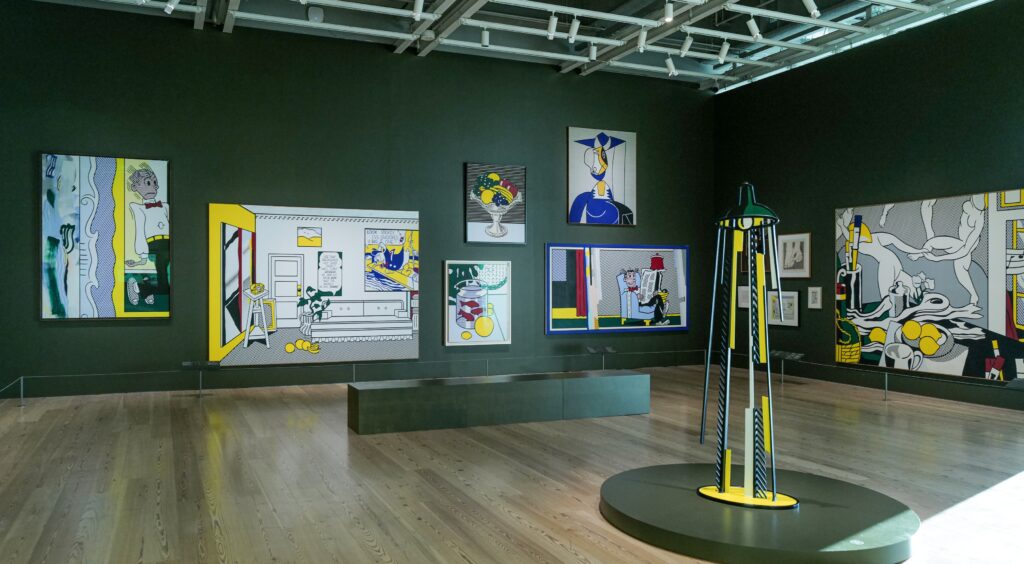
The early critical response suggests that this approach has produced both admiration and frustration. Andrew Russeth, writing for Artnet, praises the exhibition’s clarity and understated intelligence, while Marion Maneker in Puck questions whether its selective treatment gives sufficient space to Lichtenstein’s range. Their disagreement identifies the real challenge facing any retrospective of this artist: how to recover the complexity behind a visual language that now seems almost universally understood.
One of the strongest ideas is the reconstruction of Lichtenstein’s 1962 debut exhibition of Pop paintings at Leo Castelli Gallery. Bringing these works back into dialogue restores some of the historical context that reproductions inevitably remove. Today, a painted refrigerator or advertising image can seem comfortably familiar. In the early 1960s, these subjects challenged assumptions about what belonged in a gallery and what serious painting should look like.
That distinction matters. Lichtenstein’s achievement was never simply choosing an unexpected subject. He understood how a change of scale, context and composition could transform the way an image operated. An illustration designed to be glanced at became a painting demanding sustained attention. What had once served a story or sold a product became a carefully structured arrangement of shapes, lines and colour.
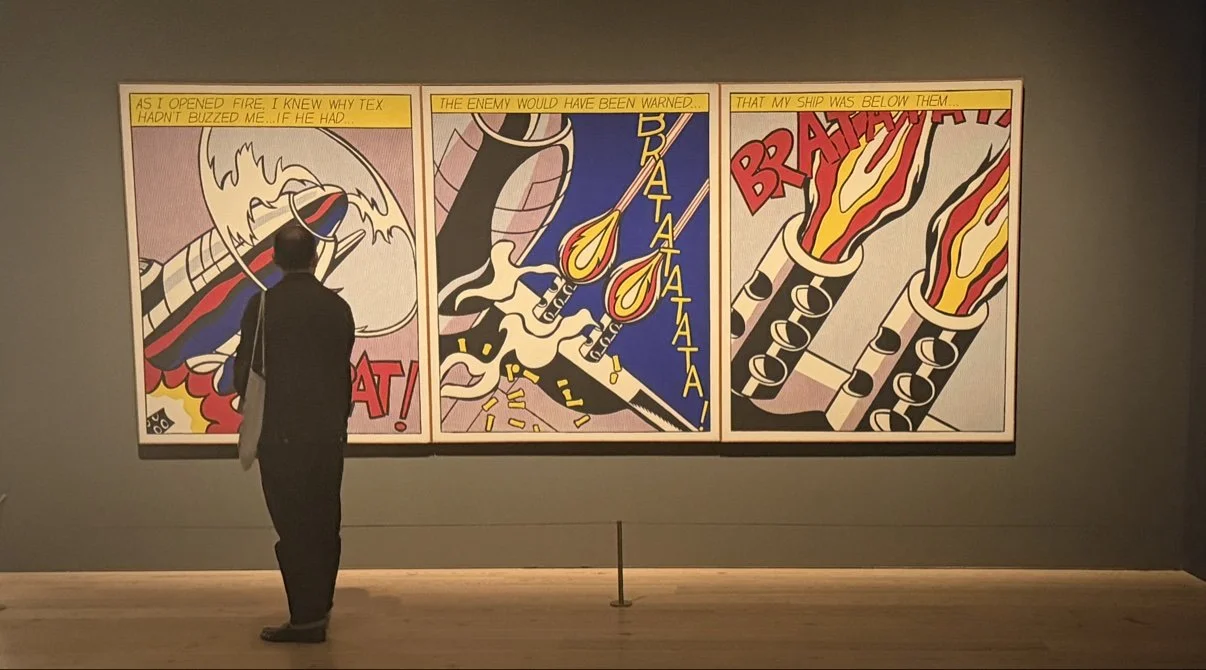
The exhibition includes Look Mickey, Drowning Girl, Masterpiece and Happy Tears, works that remain central to his reputation. It also includes Crying Girl, Temple and Brushstroke, connecting the paintings to his prints of the 1960s. Their accessibility should not be confused with simplicity. These paintings offer emotional situations that appear immediately legible, yet withhold much of the narrative that would explain them. A fragment of dialogue becomes disproportionately important. An expression is suspended between sincerity and exaggeration. The viewer recognises the language but cannot fully resolve the story.
Russeth’s review is particularly attentive to the discomfort within these images. It is a useful corrective to the cheerful branding that often surrounds Pop Art. Lichtenstein’s women cry, his characters worry, and his images of warfare turn destruction into graphic spectacle. Beneath their polished surfaces lies a world in which feeling has already been packaged for consumption. Their beauty does not make that world reassuring.
The question of borrowing also deserves attention. Lichtenstein’s paintings depended on imagery made by other people, including commercial illustrators and cartoonists. Recognising his transformations should not require overlooking those sources. The Whitney’s inclusion of source material and works by artists such as Richard Pettibone and Sturtevant makes originality a subject for examination rather than an achievement to be accepted without question. Who creates an image, and who ultimately receives recognition for it?
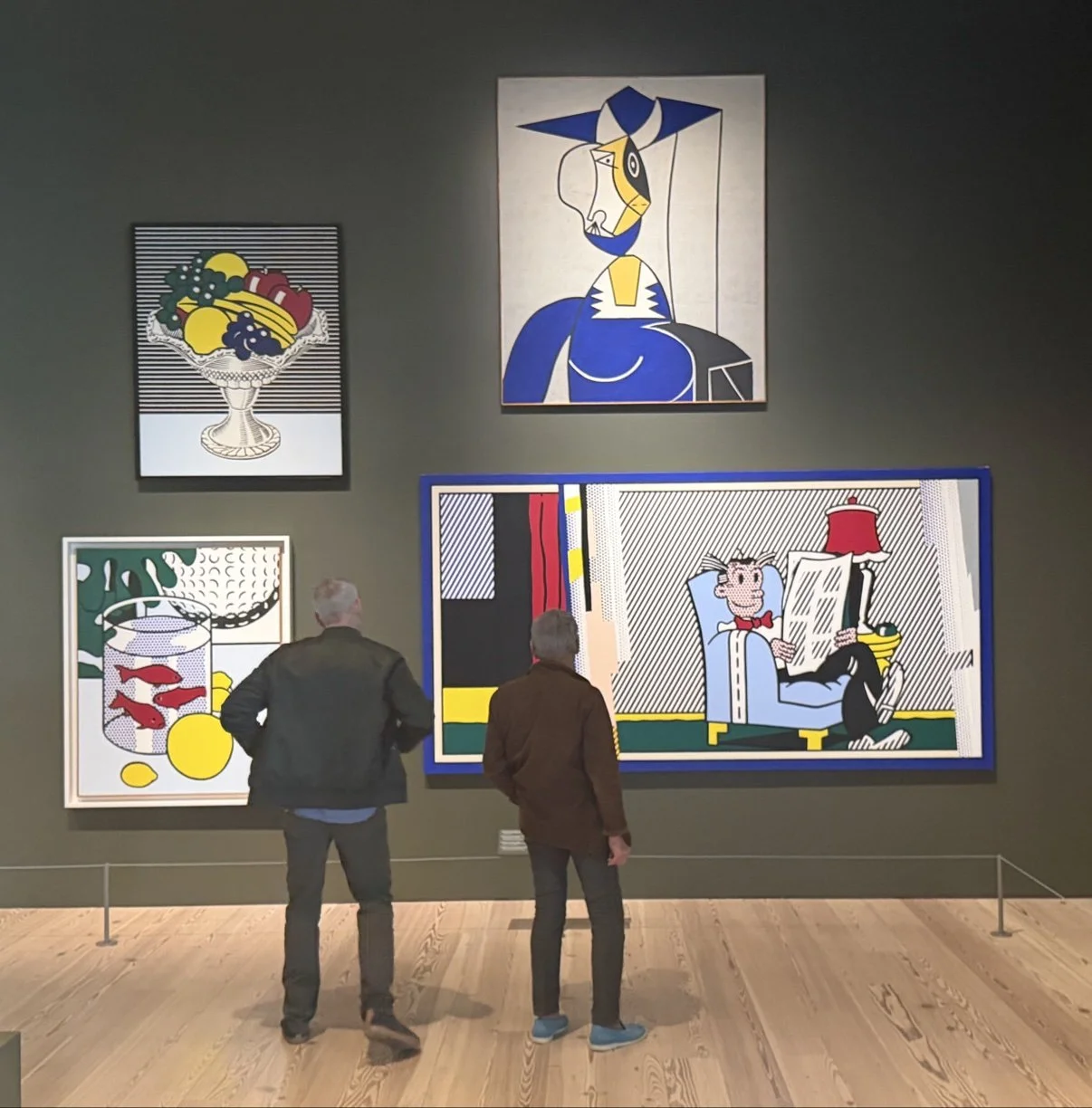
For me, the most persuasive way to understand Lichtenstein is through the tension between apparent impersonality and deliberate construction. The paintings imitate the appearance of commercial reproduction, yet their compositions were developed through drawing, adjustment and physical execution. Their precision is an artistic decision. The absence of an expressive brushstroke does not mean the absence of an artist’s judgement.
Little Big Painting offers a particularly sharp example. Here, the brushstroke itself becomes an image: outlined, enlarged and contained within Lichtenstein’s graphic vocabulary. A mark associated with spontaneity is reconstructed through control. The result is funny, but the humour carries a serious question. If we recognise a gesture as expressive because it resembles familiar paintings, how much of that expression belongs to convention?
The Mirror series takes the problem further. A painted mirror promises reflection while refusing to provide it. Lichtenstein gives us the visual signals through which we recognise a reflective surface, without returning our own image. Both Russeth and Maneker single out the mirror grouping favourably. Their agreement suggests that these quieter works may offer one of the clearest routes beyond the familiar comic-book identity.
The exhibition also offers connections to several important print series. Rouen Cathedral, Set III belongs to the same exploration of Monet that informed the Cathedral series prints. Entablature paintings and studies provide a route into the architectural patterns developed in the Entablature series, while Reflections on Sunday Morning introduces the interrupted imagery familiar from the Reflections series. For collectors, these connections help place the editions within the wider development of his work.
The re-created Greene Street Mural introduces another dimension: the image as an architectural environment. Originally made in 1983 and subsequently destroyed, the mural gathers elements of Lichtenstein’s visual vocabulary into a sprawling composition. Its reconstruction raises questions that suit this exhibition particularly well. What survives when an original disappears? How do documentation and repetition carry a work forward? The mural’s renewed existence makes those questions tangible.
There are limits to framing Lichtenstein primarily through contemporary image culture. Comparisons with cropping, reposting and digital circulation are useful, but they can become too convenient. A painting is experienced through its dimensions, materials and internal relationships as well as its subject. Lichtenstein deserves attention as a painter, not only as someone whose methods anticipate how we use screens.
Maneker’s reservations about the exhibition’s selectivity, alongside Russeth’s observation that relatively little work dates from after 1980, are therefore worth considering. A focused argument can sharpen understanding while leaving important territory unexplored. For collectors and longstanding admirers, the question is whether this reconsideration opens sufficient space for the later artist, rather than consolidating another version of the familiar early one.
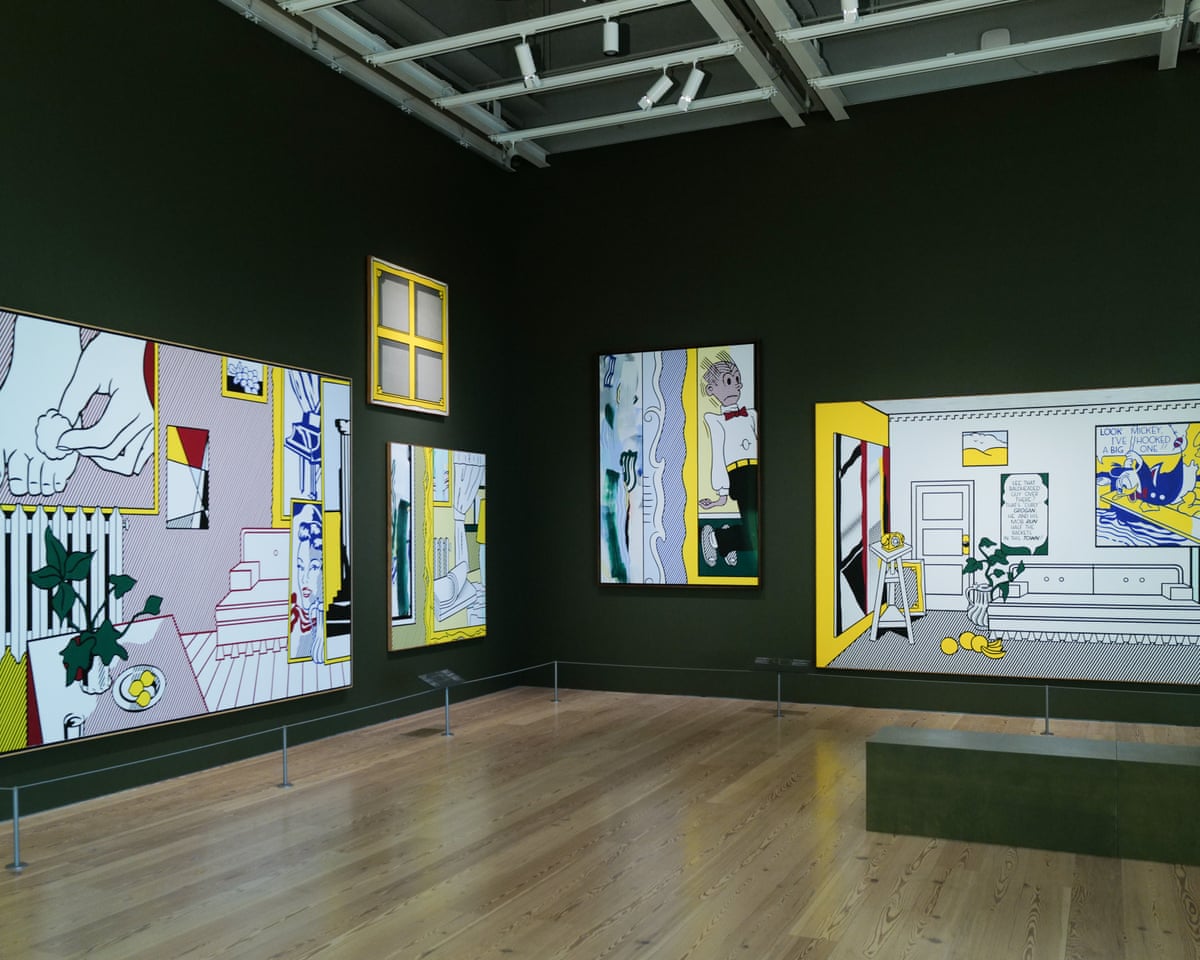
Nevertheless, the exhibition’s premise offers a valuable invitation. Lichtenstein’s recognisable style should be the beginning of our engagement with his work, rather than its conclusion. His paintings turn ordinary visual information into something precise, strange and difficult to exhaust. Like New asks us to reconsider an artist whose success has sometimes obscured his intelligence. The strongest reason to return to Lichtenstein is that recognition and understanding remain very different things.
Roy Lichtenstein: Like New runs at the Whitney Museum of American Art, New York, from 11 October 2026 to 10 May 2027.
Explore our available Roy Lichtenstein prints for sale, or contact us for advice on selling your Roy Lichtenstein prints.