
Frieze Week returned London to the centre of the international art calendar, with Frieze London and Frieze Masters running in Regent’s Park from 14 to 18 October 2026. Across the fairs, auctions and exhibitions, the week offered a revealing picture of contemporary collecting: substantial purchases, renewed attention to overlooked histories, and presentations that encouraged collectors to look beyond familiar categories.
The most interesting story was the relationship between these different activities. A seventeenth-century flower painting could command one of the week’s largest reported fair transactions, while new paintings found buyers through concentrated solo presentations. Elsewhere, museum and gallery exhibitions gave visitors the time and context that a crowded fair can struggle to provide.
What Sold at Frieze London?
There were significant reported sales. David Zwirner placed a new painting by Michaël Borremans for $1.5 million, alongside works by Dana Schutz for $900,000 and Sasha Gordon for $400,000, the latter acquired by a European museum. At Frieze Masters, Hauser & Wirth reported selling Jan Brueghel the Elder’s Still Life of Flowers in a Stoneware Vase, dating from around 1607–08, for approximately £5 million.
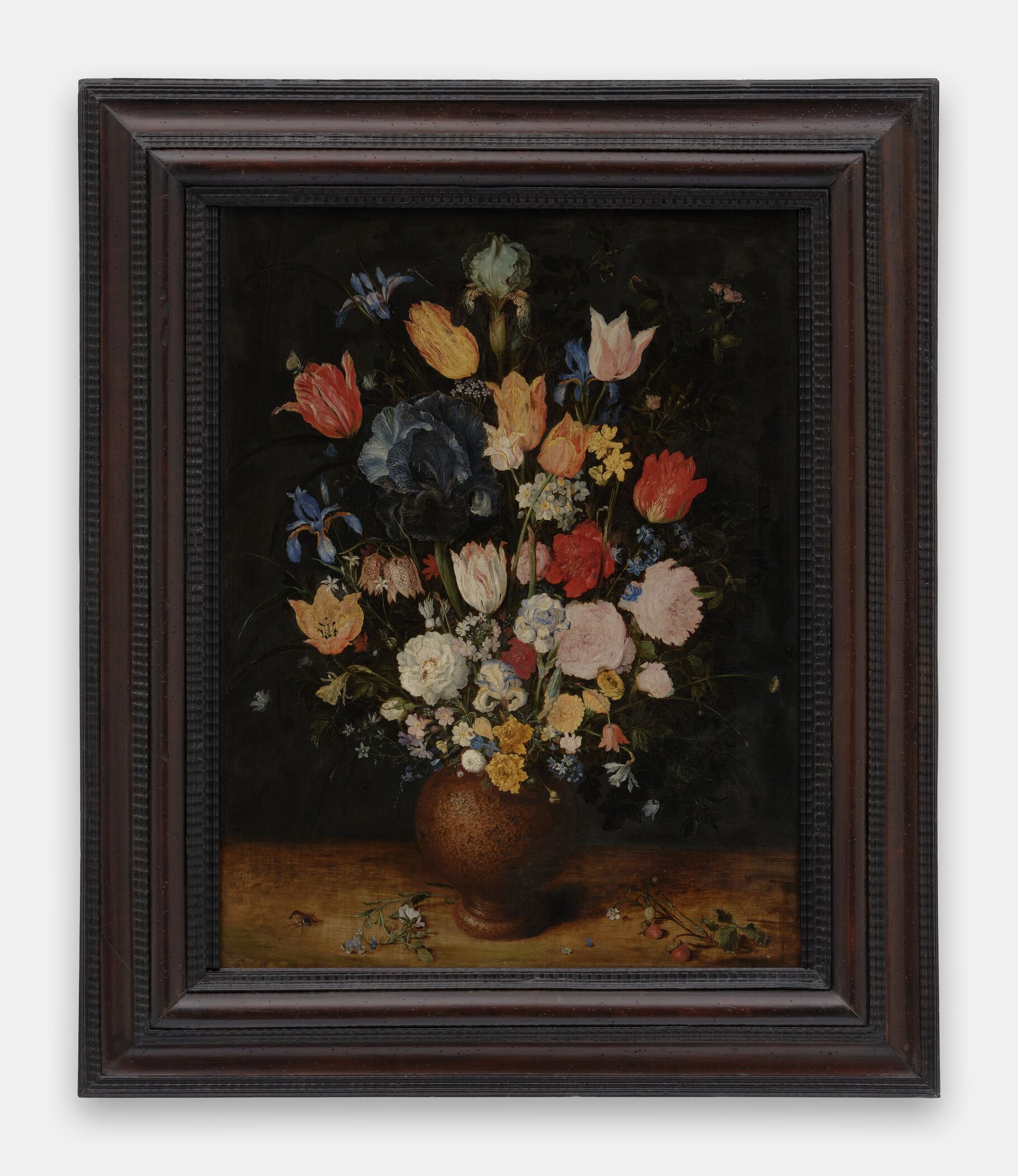
These transactions show that collectors were prepared to make substantial commitments across periods. They do not, on their own, establish a recovery across the entire market. Fair figures are generally supplied by galleries, and the works that sell are more visible than those that remain available.
A useful distinction also separates commercial success from artistic judgement. A presentation can sell well without advancing a compelling argument about art; an ambitious project can deserve attention before a buyer appears. Frieze Week is most rewarding when those questions remain open, rather than allowing a price to settle the discussion.
Why Solo Presentations Mattered
Several galleries gave individual artists enough space to establish a coherent visual world. Gagosian devoted its Frieze London booth to six new large-scale paintings by Albert Oehlen. Pace focused on Marina Perez Simão, while Pilar Corrias brought together Sholto Blissett, Rachel Rose and Georg Wilson through their engagement with landscape.
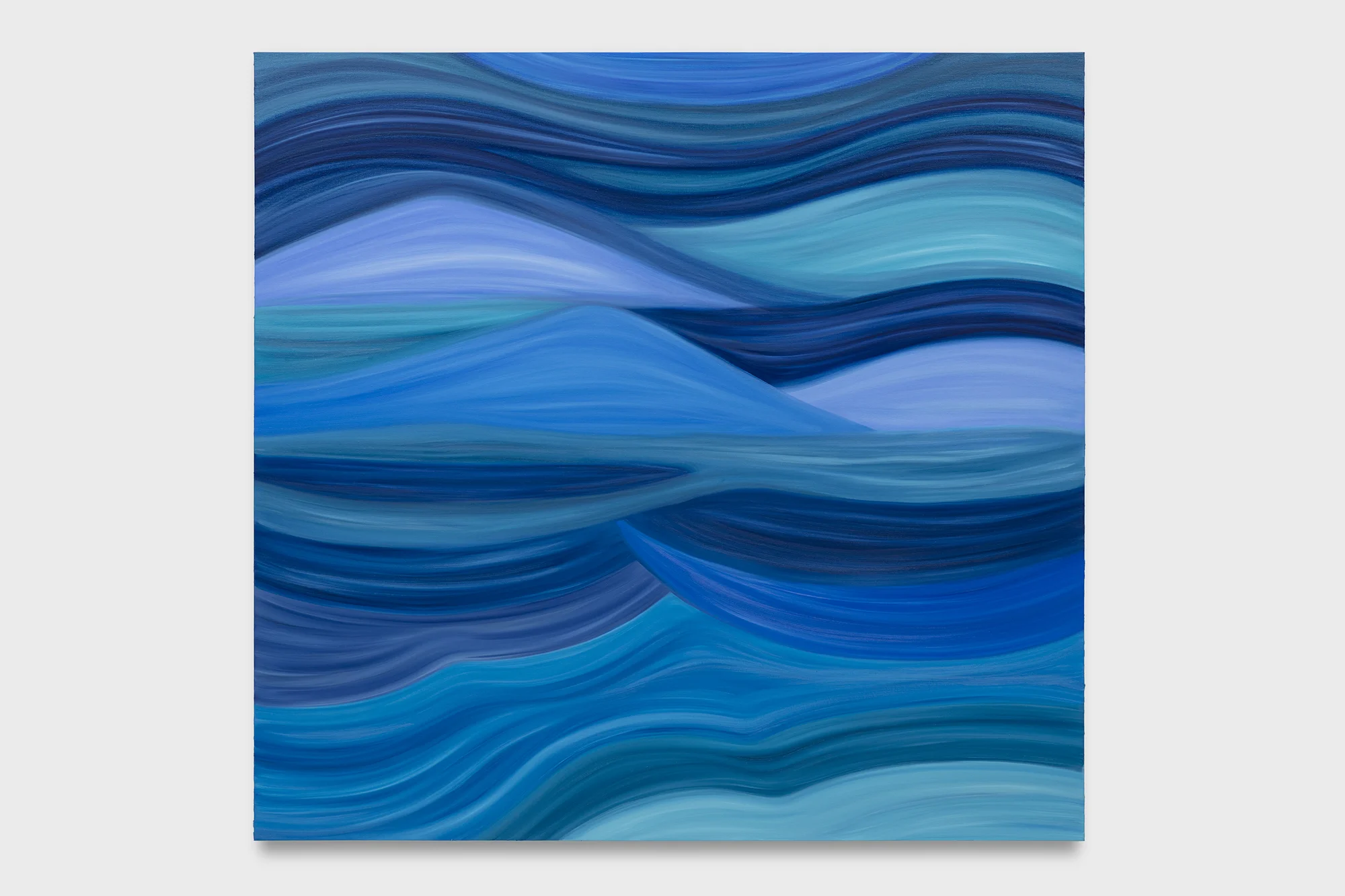
Perez Simão’s presentation is particularly useful for understanding the value of this approach. Her new paintings explored families of magenta, blue and grey, using shifts within a restricted range of colour to suggest atmosphere, space and movement. Pace conceived the booth as an environment for sustained engagement with the works. By the fair’s close, the gallery reported that the presentation had sold out.
The artistic interest lies in the opportunity to compare. Seen together, related paintings allow small differences to become consequential. A shift in temperature or density can change how a composition feels. The collector encounters a developing investigation, with individual works gaining meaning through their relationships.
That experience has relevance beyond contemporary painting. Collectors of editions also benefit from seeing works within the context of a portfolio or an artist’s wider practice. Recognition opens the conversation; comparison makes it more informed.
Frieze Masters and the Reconsideration of Art History
Frieze Masters supplied some of the week’s strongest reasons to revisit established narratives. Its new curatorial thread, Queering Modernism: Visual Languages of the 20th Century, conceived by Anke Kempkes, foregrounded the role of sexuality, gender and self-representation within modern art.
David Zwirner and Victoria Miro’s joint Alice Neel presentation gave this proposition a human focus. Drawing on the Hilton Als-curated exhibition At Home: Alice Neel in the Queer World, it brought together portraits of people from queer communities and their wider circles, supported by archival material.
Neel’s subjects emerge as individuals with particular lives and relationships. That specificity gives the presentation its force. A familiar artist can become newly legible when the people she painted are understood more fully. The galleries reported three painting sales at $1.8 million, $1.6 million and $1.6 million, but the historical argument deserves attention independently of those results.
The fair’s Spotlight section extended this emphasis on reconsideration through focused presentations of artists whose contributions warrant wider recognition. Such projects can change the experience of a fair: alongside acquisition comes the possibility of revising what we think we know.

Modern Masters Beyond the Headline Paintings
The Brueghel sale demonstrated the continued appeal of historical painting, but Frieze Masters also offered encounters with modern art across different materials and scales. Hauser & Wirth reported selling Picasso’s Violon, made in 1943, for €850,000.
For collectors interested in Pablo Picasso’s original prints, this breadth is a useful reminder of the experimentation that connects his work across media. A collection can follow an artist’s thinking through changes in technique, subject and construction, rather than treating each medium as a separate territory.
Shapero Modern’s presentation brought works by Helen Frankenthaler, Joan Mitchell and Louise Bourgeois into conversation with modern masters. Its selection included Warhol’s Grace Kelly and Ingrid Bergman With Hat, alongside prints by Picasso and Mitchell.
The presence of Andy Warhol’s prints within this setting places familiar images in a more expansive context. Portraits of celebrated women can be considered alongside work by women who helped shape modern art themselves. The comparison creates room to think about visibility, authorship and the different routes through which an image becomes culturally significant.
London Beyond Regent’s Park
The wider exhibition programme strengthened the week considerably. At Gagosian’s Grosvenor Hill gallery, This Is Still Not a Pipe: The Afterlife of Magritte placed works from across Magritte’s career alongside those of more than forty artists of different generations. Organised with the Fondation Magritte, the exhibition explored how his unsettling treatment of familiar objects continues to shape contemporary art.
This kind of exhibition adds depth to the fair experience. An artist’s influence becomes something to examine through particular works, with connections that can be persuasive, surprising or open to disagreement. It offers a richer account of artistic legacy than the repetition of an iconic image.
At the Barbican, Robert Ryman: The Real Thing provided another model of attention. Bringing together more than sixty works, the exhibition examined his sustained experimentation with paint, supports and the relationship between an artwork and its surroundings.
Ryman’s apparently restricted vocabulary makes differences in material and application especially important. During a week dominated by movement between venues and rapid judgements, his work offers a persuasive argument for slowing down. The object itself needs time.
What Did Frieze Week Say About the Market?
The auction results added weight to the commercial picture. Christie’s two evening sales on 14 October achieved a combined £218.6 million including fees. Kandinsky’s Das bunte Leben led at £31.56 million, while Francis Bacon’s Figure in Movement made £17.185 million. The Peter Simon collection accounted for £107.5 million of the combined total.
Those figures demonstrate the impact of an important collection and exceptional individual works. Their concentration also matters when interpreting the headline. A successful evening built around major consignments cannot describe every artist, medium or price level.
The more useful conclusion for collectors is that context continued to carry weight. At Masters, it came through historical research and reconsideration. At Frieze London, focused presentations gave new work greater clarity. Across the city, exhibitions showed how an artist’s ideas can sustain attention beyond an immediate encounter.
Frieze Week 2026 offered convincing reasons to remain engaged with London. Its value lay in the breadth of opportunities to look, compare and discover—and in the possibility that a collector might leave with a different understanding of an artist they thought they already knew.
For more information or to buy Andy Warhol prints or Pablo Picasso original art, contact our team via info@alexyellop.com.