
Imagine being a Beatles fan in 1963. You buy Please Please Me, learn the songs and think you have a fairly good idea of what this band does. Three years later, you put on Revolver and reach Tomorrow Never Knows. Suddenly there are tape loops, a voice that seems to arrive from somewhere beyond the studio and a drum pattern that refuses to let go.
You might reasonably wonder what happened.
Following Picasso could produce a similar experience. Become attached to his melancholy blue figures and he moves towards pinks, performers and acrobats. Learn to recognise those and faces begin breaking into angular planes. Just when Cubism seems to explain him, classical figures appear.
There is a strong case for placing Picasso and the Beatles among the twentieth century’s greatest agents of creative change. Both made extraordinary work. More unusually, both persuaded audiences to keep following them as the work changed.
They made curiosity part of the attraction. What would they do next?
Success was never the stopping point
An established style is a useful thing. People recognise it, critics can describe it and buyers know what they are getting. Picasso and the Beatles repeatedly put that comfortable arrangement under pressure.
Picasso’s Blue and Rose periods would have been enough to sustain another artist’s reputation. He moved on to Les Demoiselles d’Avignon and, through his exchange with Georges Braque, the development of Cubism. He went on investigating classical figures, distorted portraits, sculpture, ceramics and prints.
Nor did he politely finish one approach before beginning another. Different ways of drawing and representing the world could coexist. A fluent, apparently effortless line belonged to the same artist as a face whose features seemed to have been taken apart and reassembled.
The Beatles made their changes at almost absurd speed. Please Please Me appeared in 1963, Revolver in 1966 and Sgt. Pepper’s Lonely Hearts Club Band in 1967. A listener could move from the excitement of a club band to an elaborate studio production within four years.
The early work did not become obsolete. Please Please Me remains exhilarating; Picasso’s early portraits retain their emotional force. The later experiments give us more to enjoy without requiring us to surrender what came before.
That is part of their appeal. Neither career offers just one version of its creator.

What happens if we take it apart?
Cubism can sound forbidding until you consider the freedom behind it. Why should a picture show an object from only one position? Why should a painted surface pretend to be a window? What happens when several ways of seeing occupy the same image?
Picasso and Braque tested those questions through pictures in which objects became overlapping planes, partial views and recognisable clues. A guitar could be suggested through a curve, a sound hole or a few strings. The viewer had a more active role in putting the image together.
Collage opened another door. Newspaper, wallpaper and other everyday materials could become part of the picture. Picasso’s cardboard Guitar of 1912 carried that appetite into sculpture: cut, folded and assembled materials created an instrument that nobody could play but that changed how sculpture could be made.
The Beatles found their own possibilities in taking things apart.
On Tomorrow Never Knows, recorded performances became material that could be looped, altered and mixed into something unfamiliar. Lennon’s voice was transformed through studio equipment. Rhythm, drone and recorded fragments produced a sound that went far beyond four musicians performing together.
The studio had become somewhere to invent the work.
Picasso and the Beatles invite us to enjoy the construction as well as the result. Once you start noticing how the pieces fit, there is even more to look at and listen for.
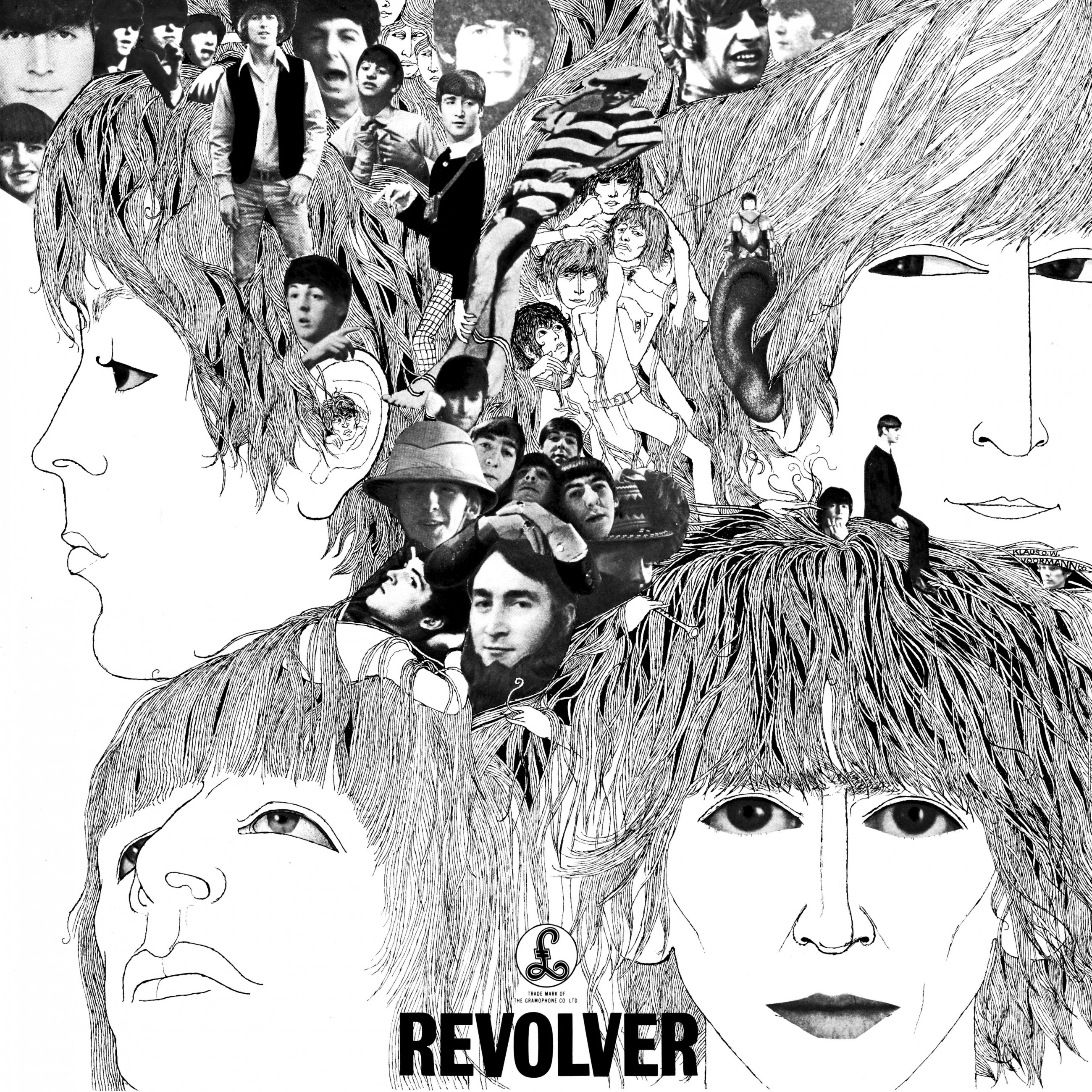
Even revolutions need good collaborators
The familiar image of Picasso alone in his studio leaves out some excellent company.
Braque was central to the development of Cubism. Specialist printers later worked with Picasso as he explored what different graphic techniques could do. These relationships brought practical knowledge, argument and the opportunity to try something again.
The Beatles had a particularly productive version of that arrangement. Lennon, McCartney, Harrison and Starr brought different instincts to the group. George Martin and the recording engineers helped turn increasingly adventurous ideas into records.
An unusual request could become the beginning of an experiment. A technical obstacle might suggest a sound nobody had intended.
That exchange is one reason Picasso’s prints are so rewarding to explore. They bring his imagination into contact with processes that have their own demands. A mark cut into a block behaves differently from a brushstroke. Ink and pressure introduce possibilities that a drawing alone cannot supply.
The finished image carries the results of those encounters. Knowing something about its making can sharpen the pleasure of looking, just as hearing an early Beatles take can change how you listen to the finished song.

The past was there to be played with
For artists who changed so much, Picasso and the Beatles spent a considerable amount of time looking backwards.
Picasso returned to earlier painters throughout his career. Cranach, Velázquez, Delacroix and Manet offered images he could question, rearrange and make his own.
His Buste de Femme d’après Cranach le Jeune, from 1958, is a particularly enjoyable encounter. The elaborate costume and formal portrait have travelled from Renaissance painting into the bold colour and pattern of a Picasso linocut.

You can recognise the earlier world without feeling that Picasso has stayed inside it. He has found something to work with, then followed it somewhere else.
The Beatles’ first album also mixed their own songs with material they had learned and performed. Their musical identity developed partly through playing other people’s work, discovering what suited them and what they could change.
There is something liberating about this. Originality need not mean conjuring everything from nowhere. It can emerge from close attention, enthusiasm and the confidence to do something unexpected with what you love.
Picasso’s later engagement with older art makes that especially clear. Decades after Cubism, he could still find a fresh challenge in a portrait made centuries earlier.
A face, a room, a song
The subjects themselves were often wonderfully ordinary.
Picasso kept returning to faces, interiors, still lifes and people close to him. The Beatles repeatedly returned to relationships, memories and daily experience. Familiar material gave both room to experiment without losing their audience altogether.
In Jacqueline au Bandeau, Picasso revisits a sitter he knew intimately. Her hair, headband and features become the elements of another visual invention. The interest lies in how he makes the portrait work, as much as in recognising Jacqueline.

Repetition can sharpen that pleasure. Looking at several portraits of the same person lets you notice how differently an artist can approach an eye, a profile or the shape of a head.
The Beatles offer a comparable listening experience. A familiar emotional subject can support the directness of an early single or the atmosphere of a later recording. The subject remains accessible while the treatment changes around it.
Picasso’s Nature morte à la suspension, 26 mars takes that freedom into a domestic setting. A hanging lamp and still-life arrangement become an opportunity to reorganise colour and space.

Picasso was eighty when he made it. He had little left to prove, yet an interior and a linoleum block could still give him something to investigate.
That continuing appetite is more interesting than the idea of genius as a series of effortless masterpieces. There is work to be done, another possibility to test, another version worth making.
The pleasure of following the changes
Comparing Picasso and the Beatles is useful because it brings their inventiveness back into view. Their fame can sometimes get in the way: the names become so familiar that we forget how surprising the work can be.
Picasso helped expand what audiences would accept within a picture and across an artist’s career. The Beatles helped expand what listeners would expect from a pop record. Both made experimentation something people actively anticipated.
For a collector, that makes Picasso’s range an invitation. A linocut, lithograph or etching offers a particular encounter with his thinking. The question becomes what attracts you to this work: the economy of its line, its colour, its wit, or the way it makes a familiar subject feel newly interesting.
Listening to the Beatles works much the same way. You may return to one record for its energy and another for the strange world it creates.
There is no need to choose one definitive Picasso or one definitive Beatles sound. Much of the pleasure lies in discovering how many there are.
For more information on Pablo Picasso prints for sale, or to discuss selling a Picasso artwork, contact our team at info@alexyellop.com.