
Andy Warhol is best known for repeating familiar images, but repetition also gave him a way to see how much an image could change. A different background could alter the mood of a portrait, while shifting the position of a printed outline could give a familiar figure a new sense of movement. His trial proofs let us see those decisions at work, sometimes in versions that look quite different from the print that went into the main edition.
For collectors, the term can be confusing because a trial proof may be numbered and still be unique in its colours or composition. If you’re considering buying one, it helps to understand what the initials TP mean, how a trial proof differs from an artist’s proof, and what to look for when comparing it with a numbered impression of the same image.
What is a trial proof?
A trial proof is an impression made while an artist and printer are developing a print. It allows them to see how different inks, backgrounds or arrangements of the image work on the printed sheet before settling on a version for the main edition. With screenprinting, a screen can be used again with a different ink, and the alignment of one printed layer against another can be adjusted. A change that sounds modest in a catalogue description can alter the emphasis of the whole picture.
In several of Warhol’s later portfolios, groups of trial proofs were documented and numbered separately from the main edition, with individual impressions differing in colour or composition. That is why a Warhol trial proof can be both numbered and unique in its particular colourway. The fraction records its place among the proofs; it does not mean every proof in that group looks the same.

Why did Warhol keep changing the colours?
Warhol often began with images that came with their own colour associations, whether the costume of a comic-book hero, the face of a film star or the logo of a company. Changing those colours let him see how far he could move away from the familiar image while keeping it recognisable. The white-ground Superman takes the experiment far enough that the outlines and their spacing do more of the work than the costume.
Apple, from the Ads portfolio, raises a similar question about an image designed to look the same wherever it appears. The numbered print gives a corporate logo the scale and attention of a portrait. The documented trial proofs show how much freedom Warhol had to vary an image whose original purpose was to be instantly and consistently identified. It’s one reason the proofs are worth looking at beside the edition: the comparison makes it easier to see which parts of the image Warhol relied on and which he was willing to change.
What’s the difference between a trial proof and an artist’s proof?
An artist’s proof (AP) is usually an impression set aside for the artist outside the main numbered edition. It generally follows the same design and colours as the main edition, so an AP is not necessarily an experimental version. A printer’s proof (PP) is typically reserved for the printer, while hors commerce (HC) means that the impression was originally set aside outside the normal sale edition. An exhibition proof (EP) may be designated for display, and a bon à tirer (BAT) is the approved impression used as a reference for printing the edition.
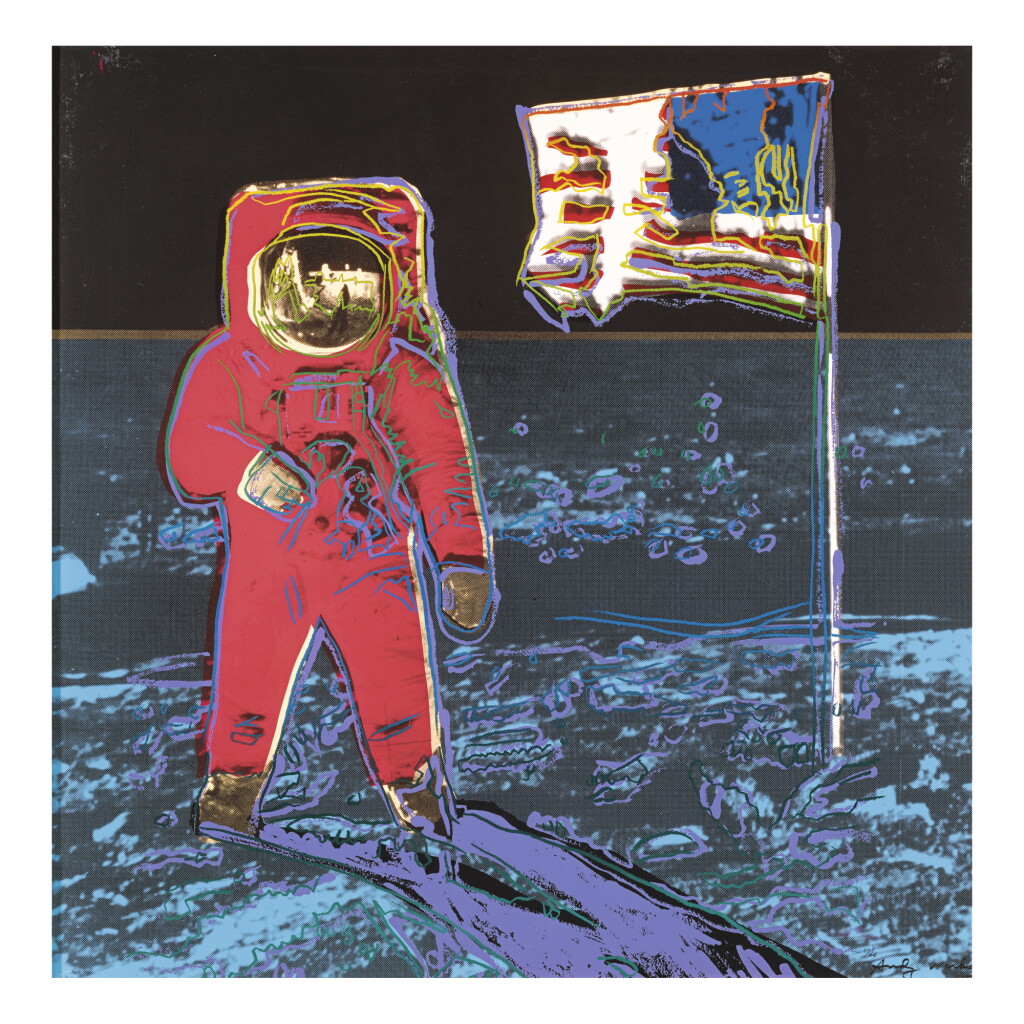
Those terms describe different roles, and the exact arrangements vary from print to print. For Apple, there are documented artist’s proofs as well as a separate group of unique trial proofs. Two listings can therefore both say “proof” and refer to quite different things: one to an impression generally consistent with the edition, the other to a distinct version of the image.
Where are Warhol trial proofs signed and numbered?
On many Warhol trial proofs, the numbering is accompanied by TP or T.P. When the number is written as a fraction, it identifies the impression within the group of trial proofs, separately from the main numbered edition. The signature and numbering can appear on the front or reverse, depending on the publication. Some late prints were issued with a stamped certificate on the reverse bearing the estate executor’s signature rather than Warhol’s own.
Before buying, ask for photographs of both sides of the print, with close-ups of the signature, numbering and any stamps or certificates. The Feldman and Schellmann catalogue raisonné can help establish which proofs were issued, while documented impressions of the same work can show where the marks should appear and who signed them. The initials alone aren’t enough to establish authenticity.
Is a Warhol trial proof worth the premium?
Start by comparing it with the numbered edition of the same image. Ask what has actually changed: the ground, the placement of a second image, the balance of colour, or a material such as diamond dust. Then decide whether those differences are what drew you to the print in the first place. A collector may prefer the colourway they have known for years, while someone else may find that an unfamiliar version makes them look at the work afresh.
If you’re comparing prices, look for documented sales of proofs of the same subject wherever possible, and take account of the colourway, condition and provenance. A price achieved by a markedly different proof is a useful reference, but it won’t tell you what every proof of that image should cost. Our guide to collecting Andy Warhol prints puts trial proofs in the context of his wider editions and portfolios.
Print Glossary
Trial Proof (TP): An impression made to test how a print will look, allowing the artist and printer to try different colours, adjust the alignment of layers or revise the composition. Many of Warhol’s documented trial proofs from his later portfolios are unique variants.
Artist’s Proof (AP): An impression set aside for the artist and numbered separately from the main edition. It generally follows the finished design and colours of the edition.
Hors de Commerce (HC): French for “outside of trade”. These impressions were originally set aside from the edition offered for sale and might be retained by the artist or publisher, given as gifts or kept for reference. They can subsequently appear on the secondary market.
Printer’s Proof (PP): An impression reserved for the printer, usually corresponding to the finished edition.
Exhibition Proof (EP): An impression designated for exhibition or display, separately from the main numbered edition.
Bon à Tirer (BAT): French for “good to print”. The approved impression that serves as the printer’s reference for the edition.
For more information on Andy Warhol prints for sale, or to discuss selling a Warhol print or trial proof, contact our team at info@alexyellop.com.