
Key Takeaways
- Warhol's print market turnover has grown 57% over the past decade, from roughly $29.5 million (2015) to $46.4 million (2024).
- Warhol has ranked among the top 5 highest-grossing artists at auction worldwide for decades — a level of sustained market strength very few artists have matched.
- Demand concentrates around Warhol's most iconic imagery, but genuine, sustained collector interest runs across every price point in the market..
- Trial proofs, uniques, and complete portfolios sit apart from the standard numbered edition and typically command a significant premium over their main-edition counterparts.
No artist has changed what art is quite like Andy Warhol. Before Warhol, a soup can was a soup can and a screenprint was a reproduction. After Warhol, both were capable of carrying the full weight of fine art — a shift so complete that it now reads as obvious, which is itself the measure of how thoroughly it took hold. More than sixty years on from the Campbell’s Soup Cans debut of 1962, Warhol remains one of the small number of artists whose work is recognisable to people who have never set foot in a museum: the Marilyns, the Soup Cans, the electric-chair, the portrait of Mao. That instant recognisability is not incidental to his market value — it is the foundation of it.
Warhol’s print market is, as a direct result, the deepest, most liquid, and most internationally traded segment of the entire post-war print world — instantly identifiable, readily tradeable through both auction and private sale, and backed by more than five decades of auction history. For a new collector, that depth is a considerable advantage — few artists offer genuine, well-documented entry points at every level of acquisition — from around $15,000 for an unsigned, estate-stamped edition to more than $4 million for a complete, museum-grade portfolio at auction. Trial proofs and other unique or near-unique impressions occupy a rarefied tier of their own, often trading well above their standard-edition counterparts. And at the very top of Warhol’s market as a whole, unique painted canvases such as Shot Sage Blue Marilyn have sold for as much as $195 million — a reminder of just how much headroom sits above even the rarest editioned print.
In our guide to collecting Andy Warhol prints, we cover who Warhol was, why his cultural impact translates so directly into market demand, what the current auction record shows, the standout series every collector should know, and how to think about acquisition across three practical tiers: sub-$50,000, $50,000–$120,000, and $120,000 and above.
The Factory Floor: Who Was Andy Warhol
Andy Warhol (1928–1987) was born Andrew Warhola in Pittsburgh, the son of Ruthenian immigrants. He trained as a commercial illustrator before moving to New York, where through the 1950s he built a distinguished career in magazine and advertising illustration. By 1960 he had turned to fine art, and within two years — with the Campbell’s Soup Cans paintings of 1962 — he had arrived, fully formed, at the centre of a movement.
At the Factory, his studio at 860 Broadway, Warhol worked at a pace few artists before him had attempted, turning out finished work faster than any single hand could manage alone. His studio manager, Fred Hughes, once observed that Warhol interrogated everyone who walked through the door — magnates and postal workers alike — hunting for the image that might crystallise the moment. Some of what he settled on was dismissed at the time as trivial: a Coca-Cola bottle, a soup can, Mickey Mouse. Warhol understood, before almost anyone else did, exactly how much cultural weight those images were already carrying.
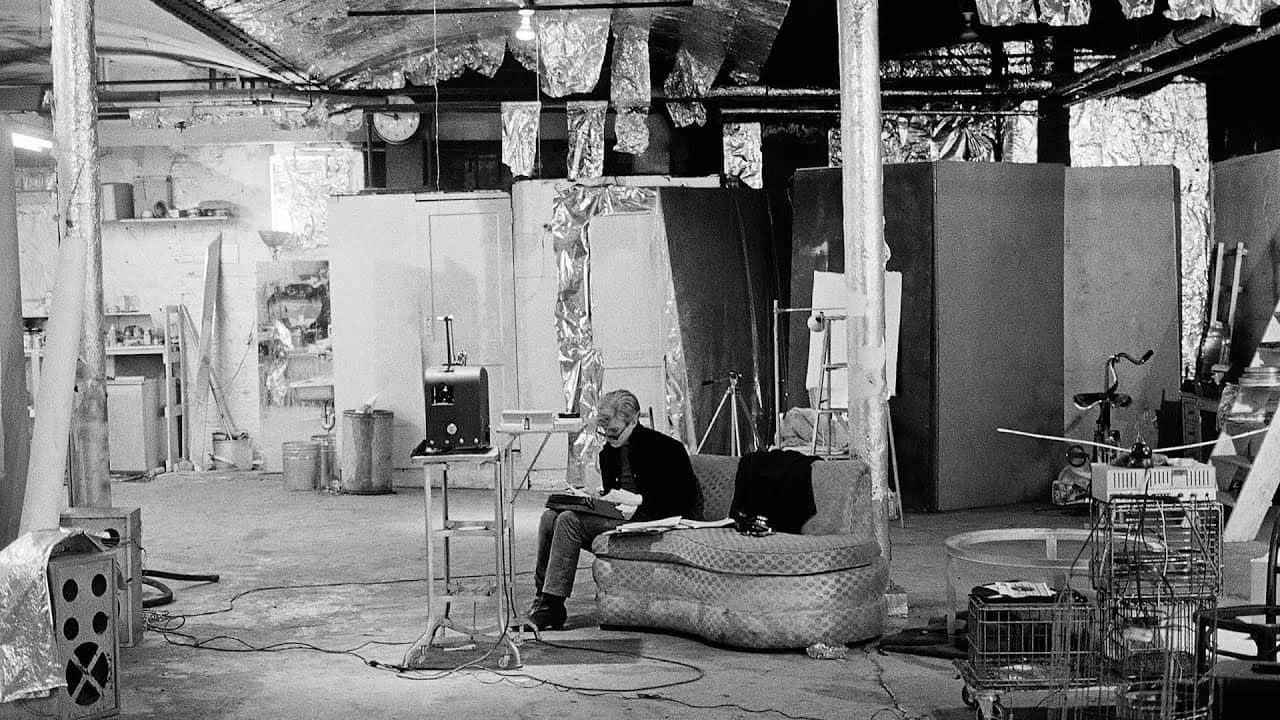
In 1967 he formalised the print side of that instinct by founding Factory Additions, a dedicated publishing enterprise. The venture was deliberately egalitarian: Warhol wanted editions priced across a genuine spread, so that some version of his work sat within reach of collectors who could never afford a painting. Over the following two decades, Factory Additions and its later collaborators released the portfolios that now anchor his market — Marilyn Monroe, Flowers, Campbell’s Soup I and II, Mao, Electric Chairs, Endangered Species, Myths, Ads — a body of editioned work as commercially significant, in its own right, as anything he painted.
By 1977, Warhol had found his closest technical collaborator in printer Rupert Jasen Smith, whose partnership introduced new devices into the later portfolios — collage, hand-applied diamond dust — and gave series such as Myths (1981) a richness his 1960s prints never attempted. Ronald and Frayda Feldman, who published Endangered Species, Myths, and Ads through the 1980s, later recalled that Warhol grew genuinely attached to the unused trial proofs left over from each print run — impressions good enough to keep, not quite matched enough to fold into the numbered edition. Rather than discard them, the Feldmans assembled them into unique “trial proof portfolios,” a footnote in Warhol’s process that has since become its own small, closely watched corner of the market — these proofs now often command two to three times the price of their standard-edition counterparts.
Warhol died in 1987, following complications from gallbladder surgery, at the height of a late-career resurgence that had reconnected him with a new generation of artists and collectors, leaving behind a body of work that permanently changed what fine art was allowed to depict, and how.
Across four decades of work, a few themes recur constantly: celebrity and its manufacture, the iconography of American consumer culture, mortality and disaster, mass reproduction itself as subject matter, and — in the later portfolios especially — politics, wildlife, and national mythology.
Cultural Impact: How Warhol Redefined What Art Is
It is easy, more than sixty years after Pop Art first emerged, to underestimate how radical its founding premise actually was: that the imagery of advertising, celebrity, and mass production deserved exactly the same seriousness as any traditional subject in art history. That premise is now so embedded in contemporary culture that it barely registers as a provocation at all — but every artist since who has worked with appropriation, repetition, celebrity, or brand, from Jeff Koons to Richard Prince to Takashi Murakami to Banksy, is working in a lineage Warhol opened.
Warhol also achieved something rarer than influence within a movement: he became one of the small number of artists whose name and imagery transcend the art world entirely. The Marilyn portrait is as embedded in global visual culture as the photograph it was drawn from; the Soup Can is arguably more famous than the brand it depicts. Few artists in any era have achieved that degree of total cultural saturation, and fewer still have done so while genuinely pioneering new technique within their chosen medium — in the way Picasso did with lithographs, or Hockney would later do with the iPad. Warhol’s late diamond-dust portfolios, developed with Rupert Jasen Smith, stand as his own version of that same restless technical experimentation.
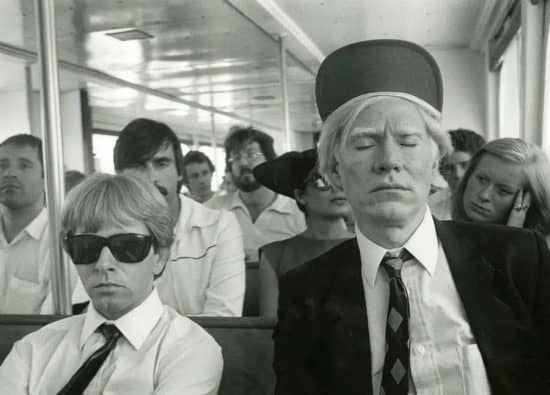
Within the print market specifically, Warhol dissolved the old hierarchy that placed the editioned multiple beneath the unique painting or drawing. Before Warhol, prints were, almost by definition, secondary objects. His screenprints made repetition itself the subject — the content, not a compromise on it — and that conceptual move is a large part of why his prints now trade as major statements in their own right, commanding results that place them among the most valuable print editions ever sold.
The Market in 2026: Current Demand
Demand for Warhol’s prints continues to broaden. Buying now extends well beyond the traditional American and British collector base, with substantial and growing participation from Asian and Middle Eastern buyers drawn specifically to the print market’s scale and instant legibility at a fraction of painting prices. Warhol print sales occur with enough frequency and depth to sustain dedicated single-artist and single-owner auctions, placing him in rare company for the sheer consistency of demand his market generates.
That demand is strongest at the top of the market. Complete portfolios, trial proofs, and the most iconic individual images — Marilyn above all, alongside Grace Kelly, Endangered Species, and the diamond-dust Myths prints — continue to command the deepest pools of competing buyers and the steepest appreciation, with complete Marilyn sets alone delivering a compound annual growth rate of around 19% over the past several years. But strength is not confined to the headline names: across the full range of the market, from Electric Chair and Liz at the accessible end to Campbell’s Soup and Flowers in the middle, there is genuine, sustained collector interest at every price point, which is precisely what keeps this market so liquid and so easy to enter at whatever level suits a given collection.
The Series Worth Knowing
What is the best Andy Warhol series to start collecting? The right starting point depends on level and goals more than any single “best” answer. For a first Warhol at a genuinely accessible price, Campbell’s Soup I offers the deepest supply and most liquid market of any portfolio. For a collector who wants maximum instant recognisability, Marilyn Monroe is the natural choice. For established collectors looking beyond a first or second piece, trial proofs across major portfolios offer genuine scarcity and typically command a real premium over the standard edition — a natural next step once the foundational series are covered. And for those already thinking about long-term appreciation, Endangered Species has shown the strongest growth of any series over the past decade. The full range of standout series is below.
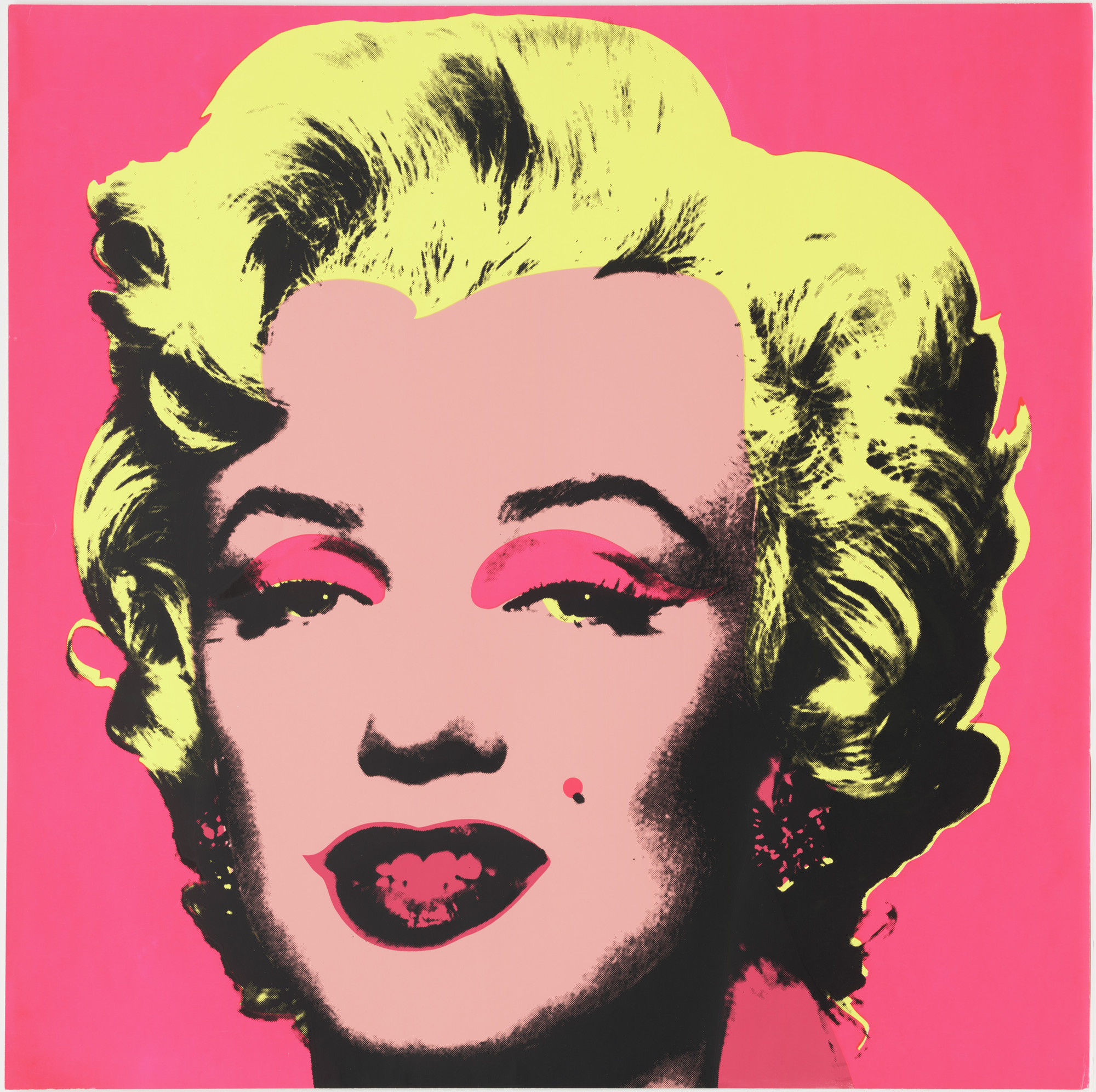
Marilyn Monroe (1967) is the defining Warhol print series, and the founding statement of Factory Additions as a publishing enterprise — ten screenprints built from one 1953 publicity still, each rendered in a deliberately artificial colour register. This is the series in which celebrity, mortality, and repetition become inseparable Warhol subjects, and it remains his most recognisable image.
Campbell’s Soup I & II (1968–69) is the print counterpart to the 1962 paintings that launched Pop Art, and the deepest, most liquid portfolio Warhol produced — the most sensible starting point for any new collector.
Flowers (1970) drawn from Warhol’s 1964 debut as a painter, dispenses with the celebrity subject altogether in favour of pure colour and repetition — arguably his most abstract body of print work, and a favourite among collectors drawn to his command of colour independent of Pop iconography.
Mao (1972) ten prints derived from the official state portrait of Mao Zedong, appeared the year Nixon visited China — politically pointed in a way few other Warhol series are, and increasingly sought by collectors drawn to the political register of his output.
Electric Chairs (1971) drawn from the earlier Death and Disaster paintings, brings Warhol’s darkest subject into the print medium. Here repetition reads as numbness rather than celebration, giving the series a distinct, more sombre standing relative to his lighter Pop imagery.
Myths (1981) gathers ten twentieth-century American archetypes — Superman, Uncle Sam, the Witch, Mickey Mouse, Warhol’s own Shadow — several finished with Rupert Jasen Smith’s hand-applied diamond dust. It is the technical high-water mark of the later print career, and a natural companion to the earlier celebrity portraits for collectors interested in Warhol’s late-period works.
Endangered Species (1983) is the strongest growth story in the print market over the past decade — a portfolio that began as a comparatively modest publication and has become one of the most closely watched, and best-performing, sets Warhol ever produced.
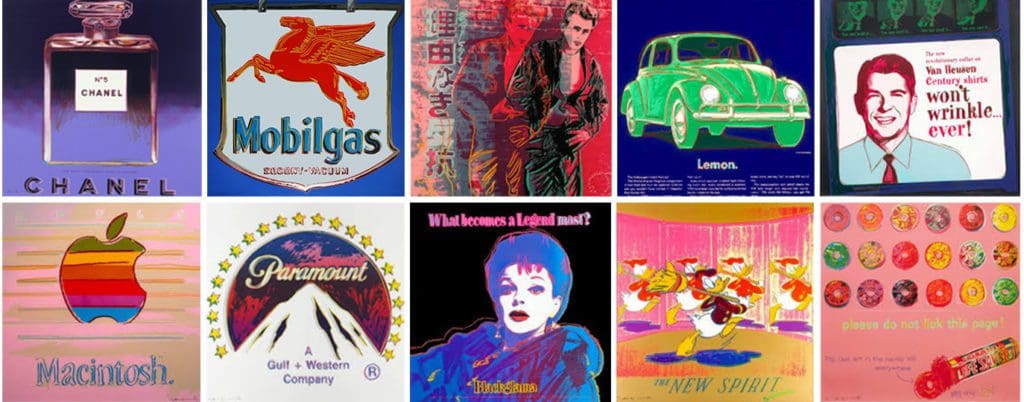
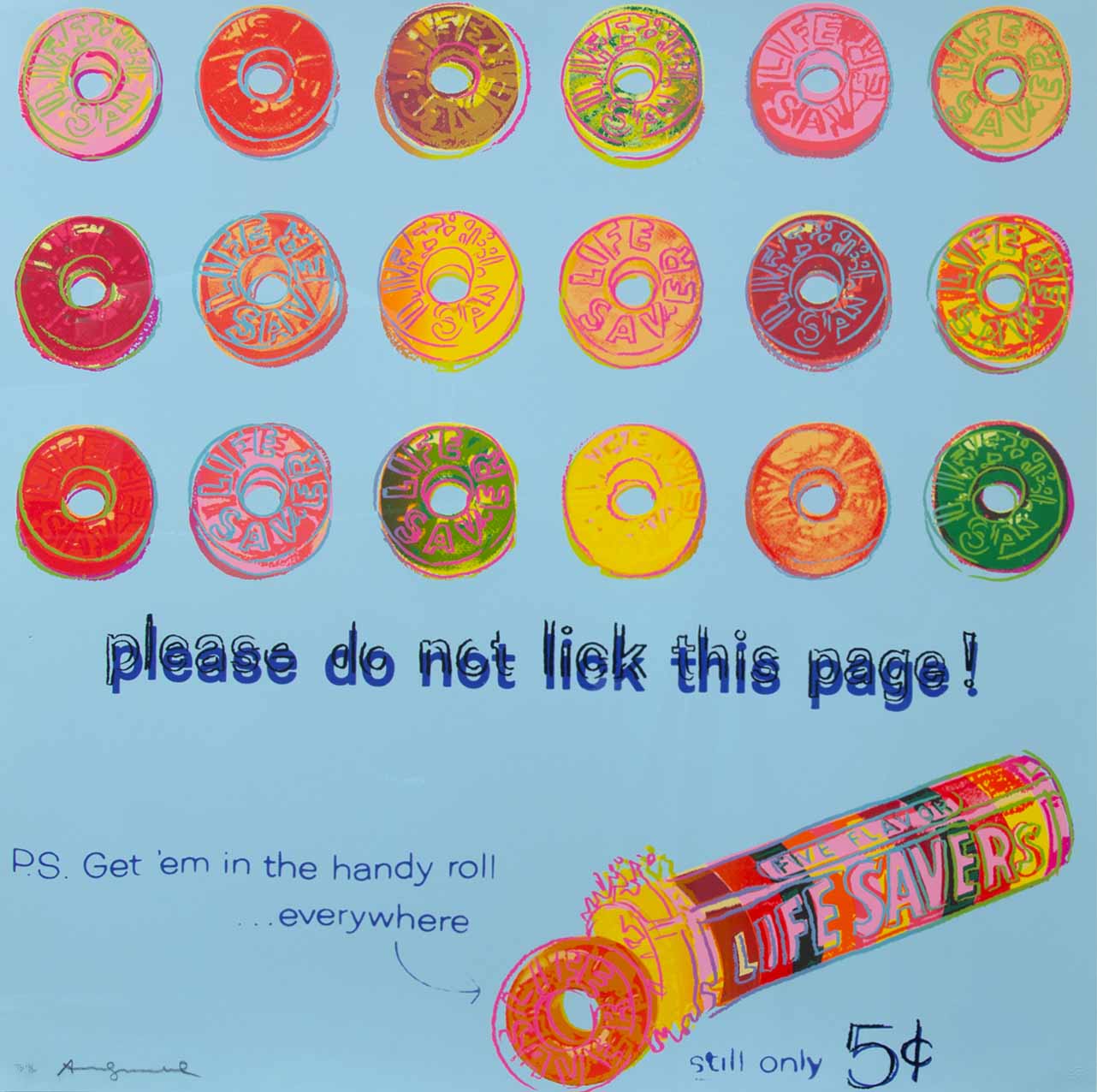
Ads (1985) a late portfolio built from ten historic advertising images, marks a deliberate return to Warhol’s commercial origins. It is less widely known than the earlier series, and correspondingly attractive to collectors seeking canonical Warhol at a relative discount to the market’s headline names.
Authentication and Provenance
How can I tell if my Warhol print is authentic? Genuine confidence comes from checking four things together: the signature style against the correct period, the edition size and phyiscal size of the work against the catalogue raisonné, the paper and printing quality against the era the portfolio was produced, and a documented ownership history. No single check is conclusive on its own, but together they give a reliable picture.
Buying with confidence starts with knowing what to look for. Signature is the first and most useful check: Warhol’s signature evolved across his career, from a loose cursive hand or “AW” initials in the 1950s, to a rubber-stamped signature introduced alongside his handwritten one by the late 1960s, to a more legible hand from the 1970s onward — matching the signature to the correct period for the work is the starting point for any assessment.
Edition size is the second check, cross-referenced against the Andy Warhol Prints: A Catalogue Raisonné, which lists every documented print with its correct edition size and details. Paper and printing era should also line up: Warhol’s 1960s portfolios were printed on the mass-produced stock available at the time, which has aged and toned consistently across genuine examples from that period. And provenance closes the picture — a clear paper trail, whether an invoice from the originating gallery, exhibition history, or auction catalogue references, gives real confidence in a work’s background.

Collecting by Tier
How much does an Andy Warhol print cost? Andy Warhol prints span an unusually wide range, from around $15,000 for an early or lesser-known image to well over $120,000 for a top colourway of an iconic series, with complete portfolios reaching into the millions. Price depends primarily on subject, colourway, condition, and edition type — the breakdown below covers what to expect at each level.
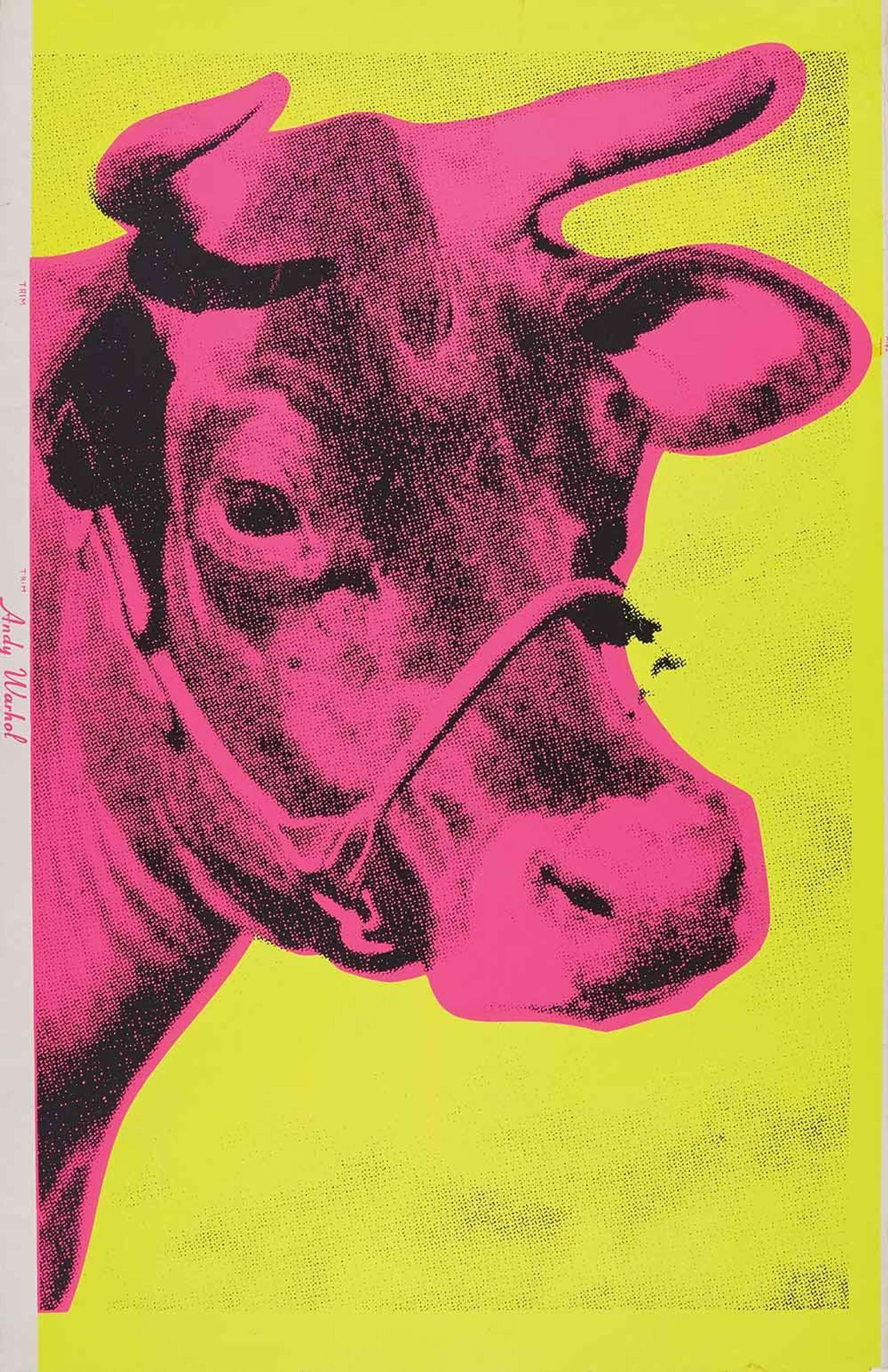
Starting a Collection (Sub-$50,000) is the point of entry into genuine, primary Warhol print material, and the best-performing segment of the market by percentage gain. This is where Cooking Pot, Banana, and After the Party sit — early or lesser-known images that carry real historical weight without the price tag of the headline series — alongside Electric Chair, Space Fruit, certain Campbell’s Soup subjects, the Cow prints, and other early-1960s work. Condition and provenance carry real weight here, since this is where inventory turns over fastest — a clean paper trail matters more at this level than almost anywhere else, simply because there’s more volume moving through it. The tier suits collectors building a first Warhol holding, and increasingly draws seasoned buyers who recognise genuine long-term demand rather than a simple bargain.
Core Collector ($50,000–$120,000) is the heart of the mid-market: Liz, Dollar Sign, Ingrid Bergman, and the general Cowboys and Indians series all trade comfortably in this range. The difference between a good example and a great one in this range is almost always image, colourway, and condition rather than anything structural — this is where specialist guidance earns its keep, since two prints from the same edition can sit at very different points within this band depending on which of those factors line up.
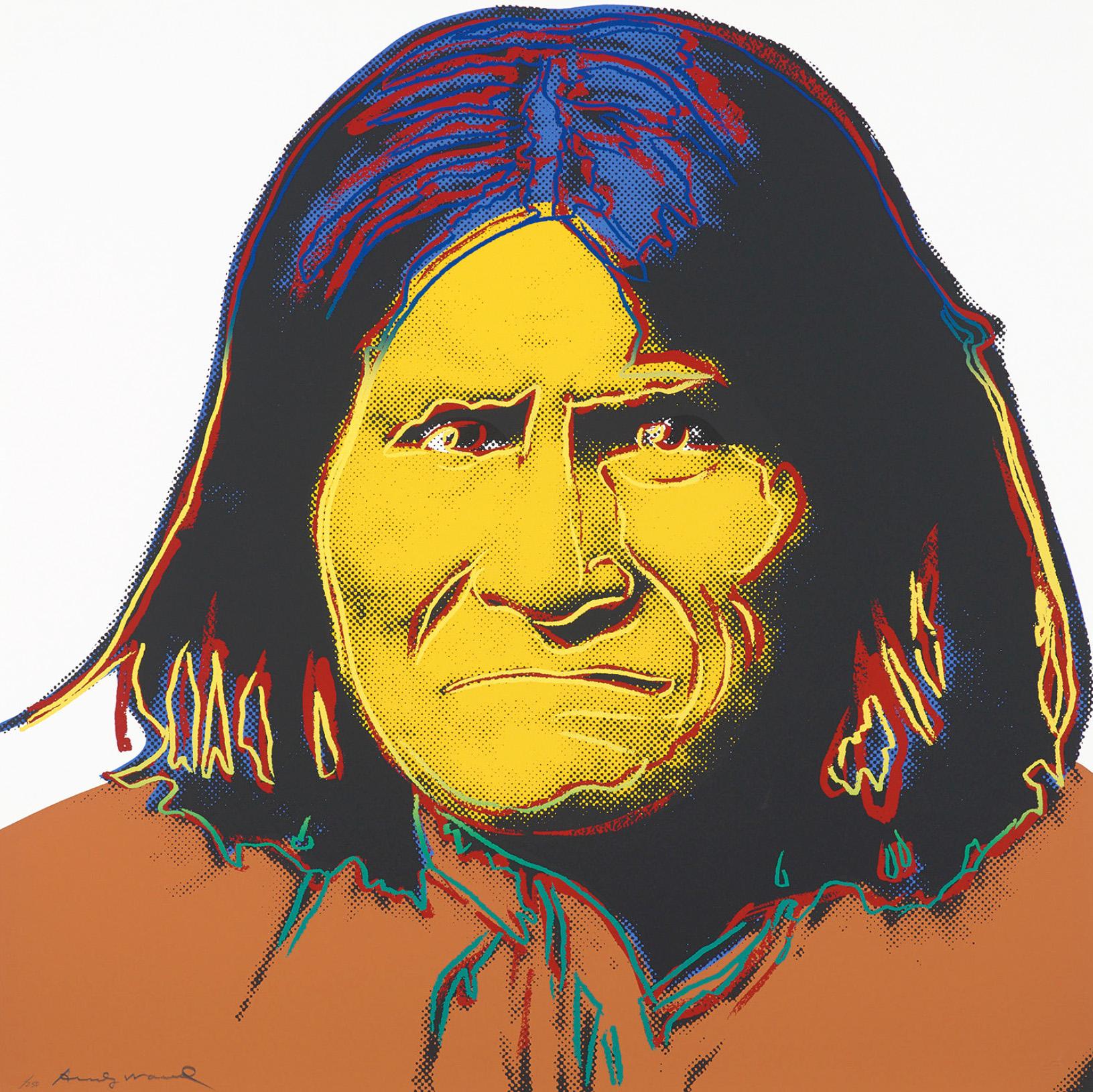
Established Collector ($120,000 and above) is the summit: Marilyn, Flowers, and Myths anchor this tier as Warhol’s most significant and sought-after series, alongside Grace Kelly, Mick Jagger, Moonwalk, the Ads series, standout Cowboys and Indians subjects such as John Wayne, and the Endangered Species series. Collectors at this level are typically building museum-calibre holdings or treating Warhol as a core position within a broader blue-chip allocation. Provenance, exhibition history, and overall condition drive value more decisively than anything else once a collection reaches this stage.
Trial Proofs, Uniques, and Complete Portfolios sit apart from the standard numbered edition, and deserve separate consideration. Trial proofs — the impressions Warhol and his printers set aside before finalising a run — are genuinely scarce and typically command a significant premium over the main edition of the same image. Unique or near-unique prints, where only a handful of variant impressions exist outside the numbered run, occupy their own rarefied position again above that. And complete portfolios, bought as a full set rather than piece by piece, carry a premium of their own for collectors who value completeness and are usually the strongest long-term holds within any series. All three formats call for working closely with a specialist, since authentication and provenance questions are more pronounced the further a work sits from a standard numbered print.
Acquisition Strategies
Beyond simply choosing a price point, the most satisfying Warhol collections are usually built around a clear strategy. A few approaches work particularly well for print collectors.
Series Focus concentrates on a single portfolio, such as Marilyn, Flowers, or Endangered Species, building real expertise and often revealing undervalued colourways within that series that a more generalist buyer would overlook.
Era Focus builds a collection around a specific period, such as the 1960s breakthrough series (Marilyn, Campbell’s Soup, Liz) or the more technically elaborate 1980s portfolios (Myths, Endangered Species, Ads), telling a coherent story about Warhol’s development as an artist.
Format Focus deliberately pursues trial proofs and rare formats across several series rather than main editions, prioritising scarcity and singularity over breadth.
Subject Focus collects across series unified by theme, such as celebrity portraiture spanning Marilyn, Liz, Grace Kelly, and Mick Jagger, allowing a collector to explore how Warhol treated a single idea across different moments in his career.
Quality-First is the most straightforward strategy: acquiring the strongest available example of any work that clears authentication and condition standards, regardless of series, prioritising long-term value over thematic coherence.
Warhol’s Three Highest Auction Results
These are unique paintings set the benchmark that dictates the Warhol market.
-
Shot Sage Blue Marilyn (1964) — $195.4 million, Christie’s, May 2022. The most expensive twentieth-century artwork ever sold at auction, and the most expensive work by an American artist. One of the “Shot Marilyns,” a group of four canvases famously fired through by the performance artist Dorothy Podber at the Factory, alongside a fifth, undamaged canvas with a turquoise ground.
-
Silver Car Crash (Double Disaster) (1963) — $105 million, Sotheby’s, 2013. A key work from the Death and Disaster series, over 2.4 metres tall, pairing a stark car-wreck photograph with a blank silver panel.
-
Eight Elvises (1963) — $100 million, private sale, 2009. A 3.6-metre silkscreen of eight repeated Elvis Presley images, sold privately and believed to have gone to the State of Qatar.
Is Andy Warhol Still a Good Investment in 2026?
Warhol’s print market offers something genuinely rare: real strength at every level, and real headroom at the top. Whatever stage a collection is at, the strongest move is to buy the best available example of the most significant series a budget allows — Marilyn, the Soup Cans, Mao, Grace Kelly, Endangered Species, Flowers — since it’s precisely these blue-chip images, backed by half a century of auction history, genuine international demand, and an artist whose cultural footprint continues to grow, that have delivered the strongest and most consistent returns in the entire market.
For more information on our latest Andy Warhol prints for sale, or to sell your Warhol prints, contact our team via info@alexyellop.com